
Schneider vs Mitsubishi VFD: Selection Guide for OEM Projects
Table of Contents
For a compact conveyor, the realistic comparison may be an Altivar Machine ATV320 against a FREQROL FR-E800 or FR-D800. For a high-dynamic machine with encoder feedback, load sharing, or demanding torque control, the better comparison is usually ATV340 against FR-A800. For a fan or pump package, Altivar Process ATV600 and FR-F800 belong on the shortlist.
Those are different engineering decisions. Comparing one manufacturer’s entry-level drive with the other manufacturer’s performance range will produce a misleading result.
This guide explains how to compare Schneider Altivar and Mitsubishi FREQROL drives for a new OEM project, including where each platform tends to fit, what must be verified in the manuals, and which details commonly cause trouble after the machine reaches site.
Schneider vs Mitsubishi VFD at a Glance
| Selection area | Schneider Electric Altivar | Mitsubishi Electric FREQROL |
|---|---|---|
| Compact, cost-sensitive machines | ATV12 for basic commercial equipment; ATV320 for simple and advanced machines | FR-D800 for compact general-purpose duties; FR-E800 when more control, networking, safety, or maintenance functions are needed |
| High-performance machinery | ATV340 | FR-A800 and application-specific FR-A800 Plus versions |
| Pumps, fans, and compressors | ATV600 range; ATV320 can cover smaller machine-level duties | FR-F800; FR-E800 can cover smaller general-purpose duties |
| Demanding process loads | ATV900 for conveyors, cranes, mills, and other process applications | FR-A800, FR-A800 Plus, or another application-specific configuration |
| Engineering software | SoMove with the appropriate Altivar DTM | FR Configurator2 |
| Typical ecosystem advantage | Modicon PLCs, EcoStruxure Machine architecture, CANopen, Modbus, and Schneider motor-control products | MELSEC PLCs, GOT HMIs, CC-Link networks, Mitsubishi motors, and the wider MELSOFT environment |
| Main selection caution | Network and advanced safety functions may require a particular drive version, adapter, or option module | Communication protocol, safety level, I/O, and terminal arrangement vary by model suffix and protocol group |
This is a platform summary, not a substitute for a datasheet. Power range, voltage class, enclosure format, approvals, and even available order codes can differ by country. Always confirm the exact reference in the current catalog for the destination market.
Start with the Machine, Not the Brand
An OEM drive specification should begin with a load profile. At minimum, define:
- Supply voltage, phase, frequency, and permitted voltage variation
- Motor type, rated voltage, rated current, base frequency, and maximum speed
- Constant-torque or variable-torque load
- Required starting and low-speed torque
- Continuous current and short-term peak current
- Acceleration and deceleration time
- Starts, stops, reversals, and braking cycles per hour
- Minimum continuous operating speed and cooling requirements
- Need for encoder feedback, speed accuracy, torque control, positioning, or load sharing
- Ambient temperature, altitude, contamination, vibration, and enclosure protection
- PLC network, control-word format, diagnostic data, and cybersecurity requirements
- Required safety functions and target PL or SIL from the machine risk assessment
If this information is missing, a brand comparison is premature. A drive selected only from the motor’s kilowatt or horsepower value can be undersized for a high-overload conveyor, oversized for a centrifugal fan, or unsuitable for repeated regeneration.
- Related Product
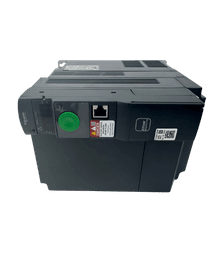
Need a Replacement Altivar Drive?
Browse new original Altivar drives for maintenance, troubleshooting, and replacement projects.
- New original parts
- Fast response
- Global shipping
Which Schneider and Mitsubishi Series Should You Compare?
Basic and Compact Machines
Schneider positions the ATV320 for simple and advanced machines. Current catalogs cover synchronous and asynchronous motors, compact and book formats, embedded safety functions, and a range of communication options. Depending on the regional catalog and voltage class, the published range extends from 0.18 kW to as high as 22 kW; the US product page lists models through 15 kW.
Mitsubishi’s new FR-D800 is the next-generation compact range that follows the FR-D700. It is intended for straightforward general-purpose applications while adding current features such as induction- and PM-motor support, functional safety, improved setup, and Ethernet versions.
The FR-E800 sits above the basic compact tier. Mitsubishi describes it as a compact, high-functionality drive with multiple ratings, several motor-control methods, network variants, safety choices, and maintenance functions. Current global information shows three-phase 200 V and 400 V models extending to 22 kW, while other supply classes and regional lineups differ.
For many OEMs, ATV320 versus FR-E800 is the fairest general-purpose comparison. FR-D800 becomes attractive when the machine needs a smaller, simpler drive and its exact control, network, and safety features are sufficient.
High-Performance OEM Machinery
The ATV340 is Schneider’s high-performance machine drive for OEM applications. Schneider lists a 0.75 to 75 kW range and supports open- and closed-loop control on suitable configurations. It is the more appropriate Altivar candidate for demanding torque response, encoder feedback, load sharing, fast machine cycles, hoisting-related functions, or advanced communication.
The closest Mitsubishi family is usually the FR-A800. Mitsubishi positions it as its high-performance FREQROL range, with real sensorless vector control and vector control using the required feedback option. Specialized FR-A800 Plus versions add functions for applications such as roll-to-roll systems and cranes.
Do not specify ATV340 or FR-A800 merely because it is the higher range. If a conveyor only needs stable speed control, basic overload capacity, STO, and Modbus communication, a correctly selected ATV320, FR-E800, or FR-D800 may reduce panel space and project complexity.
Fans, Pumps, and Fluid Systems
Schneider positions Altivar Process ATV600 for pumps, fans, and compressors. Mitsubishi positions FR-F800 for fans, pumps, and air-conditioning systems, with multiple light-duty ratings, PID functions, multi-pump functions, flying-start capability, and energy-monitoring features.
These ranges can be a better fit than a machine-performance drive when the application is dominated by variable-torque operation and process control. For small OEM skids, however, an ATV320 or FR-E800 may still be adequate if its current rating, PID functions, I/O, protection, and communication meet the specification.
Quick Product-Family Match
| OEM application | Schneider candidate | Mitsubishi candidate | What should decide the choice? |
|---|---|---|---|
| Simple conveyor, mixer, feeder, or small machine | ATV320 | FR-D800 or FR-E800 | Output current, overload duty, built-in I/O, STO, network, size, and local support |
| Packaging, material handling, or machine tool auxiliary axis | ATV320 or ATV340 | FR-E800 or FR-A800 | Dynamic response, low-speed torque, braking cycle, encoder need, and PLC integration |
| High-performance winder, crane, hoist, or load-sharing system | ATV340 or ATV900, subject to the application manual | FR-A800 or applicable FR-A800 Plus model | Closed-loop control, braking or regeneration, safe brake design, torque accuracy, and validated application functions |
| Pump, fan, compressor, or HVAC package | ATV600; ATV320 for smaller machine duties | FR-F800; FR-E800 for smaller duties | Variable-torque rating, PID functions, bypass or multi-pump logic, harmonics, enclosure, and energy monitoring |
| Harsh washdown or machine-mounted installation | Applicable ATV320 IP65/IP66 format | FR-E846 IP66/IP67 or another suitable enclosed configuration | Actual IP rating, chemical environment, cable entry, temperature, and local availability |
1. Size the VFD by Current and Duty
The motor kilowatt rating is a starting point, not the final selection value.
First, match the drive’s voltage class to the incoming supply and the motor connection. Then compare the motor nameplate full-load current with the drive’s rated output current under the required duty rating.
Both manufacturers use more than one rating concept in parts of their ranges. A model can provide a higher output current in a lighter-duty rating and a lower output current with greater overload capability. That does not mean the smaller drive is automatically suitable for a constant-torque machine.
For each candidate, record:
- Continuous output current at the specified carrier frequency.
- Permitted overload current and duration for the selected duty rating.
- Ambient-temperature and altitude derating.
- Derating caused by high carrier frequency, close mounting, enclosure conditions, or other catalog restrictions.
- Motor cable length and any required output reactor, sine filter, or motor insulation measures.
- Maximum current during acceleration, product jams, cutting, pressing, or other peak-load events.
A centrifugal fan may suit a light-duty rating because torque falls rapidly as speed decreases. An extruder, loaded conveyor, positive-displacement pump, or high-inertia machine may require a heavier rating and more thermal margin.
For an OEM, it is good practice to save the sizing calculation with the machine design file. The next engineer should be able to see why a particular current rating was selected, not just find a model number in the BOM.
- PLC Solutions
Find the Right PLC for Your System
Explore new original PLC CPUs, I/O modules, power supplies, and communication units for maintenance and automation projects.
- New original parts
- Fast response
- Global shipping
2. Compare Motor-Control Requirements Honestly
Most routine OEM applications do not need the highest advertised control performance. They need predictable starting, stable speed, enough torque through the operating range, and repeatable recovery after a stop.
ATV320 supports open-loop control of asynchronous and synchronous motors. It is suitable for many conveyors, mixers, pumps, fans, and general machine axes. FR-E800 supports induction and PM motors with multiple control methods, while FR-D800 provides a simpler control platform for induction and PM applications.
When the machine requires tighter speed regulation, torque control, encoder feedback, or load sharing, compare ATV340 with FR-A800 using the actual motor and feedback hardware. The drive family name alone does not guarantee that the required encoder type, option card, control mode, or motor database is supported.
Ask these questions during the design review:
- Must the motor produce high torque at very low speed for long periods?
- Does the load need speed control, torque control, or position-related functions?
- Is encoder feedback required, and which electrical interface does the encoder use?
- Will the drive run a standard induction motor, permanent-magnet motor, synchronous reluctance motor, or another motor type?
- Can the motor cool itself at the minimum operating speed, or is forced ventilation required?
- Is automatic motor tuning permitted on the assembled machine?
- What happens if the feedback signal is lost?
If low-speed continuous torque or precise positioning is central to the application, also evaluate whether a servo system is the more appropriate technology. A high-end VFD can control demanding loads, but it is not automatically a substitute for a servo axis.
3. Treat Deceleration and Regeneration as a Separate Calculation
Many drive problems appear during stopping rather than running.
When a high-inertia load decelerates quickly, or an overhauling load drives the motor faster than the commanded field, energy returns to the DC bus. The system must absorb that energy, dissipate it in a braking resistor, share it through a common DC bus where approved, or return it to the supply through a regenerative solution.
A braking resistor may be required for:
- Fast conveyor or spindle stops
- Frequent reversing
- Centrifuges and high-inertia rotors
- Unwinders and tension-control systems
- Vertical loads and controlled lowering
- Machines that repeatedly trip on DC-bus overvoltage during deceleration
Do not assume that visible brake terminals mean any resistor can be connected. Verify whether the selected drive includes a braking transistor, the permitted resistance range, peak braking power, continuous power, duty cycle, thermal protection, wiring method, and required external braking unit.
For continuous or frequent regenerative operation, a regenerative unit or active-front-end solution may be more appropriate than heating a large resistor inside or beside the panel.
On hoists and vertical axes, the motor brake, holding brake, VFD brake logic, and functional-safety design must be engineered as one system. A dynamic braking resistor is not a safety-rated holding brake.
4. Functional Safety: Read Beyond the STO Checkbox
Both brands provide drive-based safety, but the available functions and certified level depend on the exact series and hardware.
The ATV320 product data lists STO plus functions including SS1, SLS, SMS, and GDL. For ATV340, embedded STO is available, while advanced functions such as SS1, SLS, SBC, SMS, and GDL are associated with the applicable safety-module configuration. The safety manual defines the permitted architecture, wiring, motor conditions, commissioning process, and acceptance test.
Mitsubishi’s current information shows:
- FR-D800: STO with the published PLd/Cat. 3 and SIL2 capability
- Standard FR-E800 and FR-E800-E: STO with the published SIL2, PLd, Cat. 3 level
- FR-E800-SCE: additional SS1, SLS, SBC, and SSM functions with the published SIL3, PLe, Cat. 3 level
- Standard FR-A800: STO with the current global product page listing PLe and SIL3 support; exact model and production details must still be checked
These values should not be used as a shortcut around a machine risk assessment. The required stop category, safe operating state, diagnostic coverage, test interval, feedback, contactors, safety controller, brake, and restart behavior must be designed and validated at system level.
For an OEM project, put the safety requirement into the drive specification before requesting quotations. Adding SLS or safe brake control after the panel is built can change the drive version, option module, encoder, wiring, safety PLC program, validation work, and cabinet layout.
5. Network Support Is Model-Specific
Both manufacturers can connect to common industrial networks, but the implementation is different.
ATV320 has embedded Modbus RTU and CANopen through its RJ45 connection. Networks such as EtherNet/IP/Modbus TCP, PROFINET, EtherCAT, PROFIBUS DP, DeviceNet, and Powerlink are available through applicable communication options. Compact-format ATV320 drives may need an adapter to accept certain option modules.
ATV340 is available in configurations with embedded Ethernet-related communication and supports additional industrial network options. The exact capabilities depend on whether the selected reference is an Ethernet version and which communication module is installed.
Mitsubishi divides FR-E800 Ethernet models into protocol variants. Depending on the suffix and protocol group, support can include CC-Link IE TSN, CC-Link IE Field Network Basic, Modbus TCP, EtherNet/IP, PROFINET, BACnet/IP, or EtherCAT. Standard non-Ethernet versions use serial communication. FR-D800 also has standard and Ethernet configurations, but protocol availability and firmware support must be checked for the destination market.
For each VFD, verify all of the following:
- Exact protocol and drive model suffix
- PLC and drive roles, such as scanner/adapter or client/server
- Required option card, adapter, connector, and cable
- Cyclic command and status words
- Parameter access and diagnostic data
- Network update time and timeout behavior
- Device-description file and supported firmware
- Method for replacing a failed drive without rebuilding the project
- Behavior when communication is lost
An Ethernet connector is not a specification. A drive with an Ethernet port may still lack the protocol or device role required by the customer’s PLC.
- HMI Replacement
Upgrade or Replace Your HMI
Find compatible HMI panels for discontinued models, machine upgrades, and operator interface replacement.
- New original parts
- Fast response
- Global shipping
6. PLC and HMI Ecosystem Can Save Engineering Time
Schneider is often the more convenient choice when the OEM already uses Modicon machine controllers, EcoStruxure Machine software, Schneider motor-control components, and an established CANopen or Modbus architecture. Reusing validated function blocks, control words, alarm mapping, and commissioning procedures can reduce project risk.
Mitsubishi is often the more convenient choice when the machine uses MELSEC PLCs, GOT HMIs, CC-Link networks, and Mitsubishi motors or other FREQROL drives. Consistent parameter handling and diagnostics across the Mitsubishi environment can make commissioning and maintenance more familiar to the plant team.
This does not mean brands must match. A Modicon PLC can control a Mitsubishi drive, and a MELSEC PLC can control an Altivar drive when both sides support the required protocol and roles. Mixed-brand systems are normal.
The question is how much engineering work the mixed architecture adds. Test the real PLC function block, network recovery, alarm codes, reference scaling, control-word sequence, local/remote mode behavior, and replacement procedure before releasing the standard design.
7. Compare SoMove and FR Configurator2 on a Real Workflow
Schneider’s SoMove supports configuration preparation, setup, monitoring, and maintenance for supported motor-control devices using the appropriate DTM. Its official documentation includes offline configuration, saved-file comparison, parameter transfer, monitoring, oscilloscope curves, and fault-record functions.
Mitsubishi’s FR Configurator2 supports parameter setting, monitoring, trace analysis, and commissioning for supported FREQROL drives. Mitsubishi also provides features such as USB connection and, on applicable drive families, sequence-program development and offline analysis of copied parameter or trace data.
Do not decide from screenshots. Ask the commissioning team to perform the same tasks in both tools:
- Create a project offline.
- Enter motor data and run the permitted tuning procedure.
- Configure digital I/O and the PLC network.
- Trend output frequency, current, torque-related data, and DC-bus voltage.
- Save a golden parameter file.
- Compare an unknown site drive against that file.
- Replace the drive and restore the approved configuration.
- Export a parameter list and fault record for the service report.
The best tool is the one the OEM and end user can use reliably during commissioning and breakdown recovery. Software version, DTM or device support, cable type, administrator rights, and laptop operating-system policy all belong in the project documentation.
8. Panel Design, EMC, and Environment Can Change the Winner
Drive dimensions alone do not determine panel size. Include the required clearance, cable-bending radius, contactor and protection devices, line reactor, EMC filter, output reactor, braking components, shield termination, control terminals, communication module, and airflow path.
Check these points for the exact reference:
- IP degree and whether an additional enclosure or UL Type kit is required
- Maximum surrounding-air temperature without derating
- Heat loss at the expected load and carrier frequency
- Side-by-side or zero-clearance mounting conditions, where offered
- Coated-board or harsh-environment option
- Pollution degree, humidity, corrosive gas, dust, and vibration limits
- Built-in or external EMC filter and the required emission category
- Grounding arrangement and shield-clamp accessories
- Permitted motor-cable length and motor insulation requirements
- Short-circuit current rating and coordinated protective devices for the destination standard
ATV320 is available in several physical formats, including enclosed versions for harsh environments. Mitsubishi offers FR-E846 models with an IP66/IP67 protective structure. These options can remove a separate local enclosure, but only if the cable glands, disconnecting means, operator controls, chemical exposure, and installation method also satisfy the machine design.
Never use a product-family brochure as the final wiring document. The installation manual for the exact voltage and frame size must control the panel layout and protective-device selection.
9. Global OEM Supply Requires Exact Order Codes
An OEM machine may be built in one country and installed in another. That makes regional product management part of the technical design.
Before freezing the BOM, confirm:
- The complete VFD reference, not just ATV320 or FR-E800
- Input voltage and phase used at the destination
- Required UL, CSA, CE, UKCA, EAC, marine, or other approvals
- Regional power range and enclosure availability
- Network option and firmware availability
- Local stock and realistic replacement lead time
- Warranty and service route in the destination country
- Current lifecycle status and announced successor
- Availability of keypad, option cards, terminal blocks, fans, and other service parts
Avoid promises such as “Schneider is easier to source” or “Mitsubishi has better lead time” without current country-level evidence. Availability changes by model, distributor, project volume, and date.
For Kwoco-assisted sourcing or model matching, send the complete drive and motor nameplates, destination country, supply voltage, motor current, PLC protocol, safety requirement, braking duty, and photos of the control terminals. That information allows the proposed drive, option card, keypad, resistor, reactor, and accessories to be checked as one configuration instead of quoting a bare VFD that may not fit the machine.
10. Calculate Total Installed Cost, Not Drive Price
The lowest drive quotation does not necessarily produce the lowest machine cost.
Compare the complete package:
- VFD and required communication or encoder options
- Input protection, line reactor, EMC filter, and output components
- Braking resistor, braking unit, or regenerative hardware
- Keypad, remote mounting kit, cables, and connectors
- Safety hardware and validation effort
- Panel space, cooling, and wiring labor
- Engineering software and commissioning accessories
- PLC and HMI integration time
- Parameter backup, spare drive, and replacement procedure
- Local training, documentation, and service support
A more expensive drive may save enough cabinet space or commissioning time to reduce total cost. A cheaper drive may be the better choice when the machine needs only basic speed control and the plant already stocks the same model.
Price two technically equivalent BOMs. If one quotation excludes the network card, braking resistor, EMC solution, or safety option, it is not a valid comparison.
When Schneider Is Usually the Better Fit
Schneider Altivar is often the more natural choice when several of these conditions apply:
- The OEM standard is based on Modicon controllers and EcoStruxure Machine tools
- ATV320 covers the machine with the required compact/book format, safety functions, and network option
- ATV340’s closed-loop control, safety-module functions, load sharing, or machine-performance features are needed
- CANopen or Modbus is already a proven machine network
- Altivar Process functions match the pump, fan, compressor, or process application
- Schneider products and field support are readily available in the machine’s destination markets
This is a preference based on system fit, not a blanket judgment on reliability or performance.
When Mitsubishi Is Usually the Better Fit
Mitsubishi FREQROL is often the more natural choice when several of these conditions apply:
- The machine already uses MELSEC PLCs, GOT HMIs, and CC-Link networks
- FR-D800 provides all required functions in a compact general-purpose package
- FR-E800’s motor support, Ethernet variants, safety choices, or maintenance functions reduce external hardware
- FR-A800 or an FR-A800 Plus version matches the demanding torque, feedback, winding, crane, or other application requirements
- FR-F800’s fan, pump, PID, and energy-saving functions suit the package
- The end user’s maintenance team already stocks Mitsubishi drives and uses FR Configurator2
Again, the exact suffix and regional catalog decide whether the expected feature is actually present.
A Practical OEM Selection Scorecard
Score each complete drive configuration from 0 to 5. Give mandatory technical requirements the highest weight.
| Criterion | Weight | Schneider score | Mitsubishi score |
|---|---|---|---|
| Output current and overload duty | 5 | ||
| Motor type and required control mode | 5 | ||
| Braking or regenerative capability | 5 | ||
| Functional-safety architecture | 5 | ||
| PLC protocol and diagnostic integration | 5 | ||
| Environmental and regulatory compliance | 5 | ||
| Commissioning and replacement workflow | 4 | ||
| Plant technician familiarity | 4 | ||
| Regional supply and lifecycle support | 4 | ||
| Panel space, cooling, and wiring | 3 | ||
| Complete installed cost | 3 | ||
| Future machine variants and expansion | 3 |
Reject any candidate that fails a mandatory current, safety, network, environmental, or approval requirement, regardless of its score.
Then run a proof of concept with the intended PLC and motor. Test cold start, loaded acceleration, minimum speed, rapid deceleration, network interruption, emergency-stop behavior, parameter restore, and recovery after a simulated drive replacement. This is especially important when the OEM plans to standardize one VFD across several machine sizes.
Can You Replace One Brand with the Other?
Sometimes, but it is rarely a drop-in change.
An ATV320 and FR-E800 with similar power ratings can still differ in dimensions, terminals, output current, overload profile, I/O logic, analog scaling, braking connections, STO wiring, network control words, fault codes, and parameter behavior.
A cross-brand replacement requires at least:
- Electrical and mechanical fit review
- Motor-current and overload verification
- Braking and DC-bus review
- Safety-circuit redesign and revalidation where affected
- PLC and HMI software changes
- Network mapping and timeout testing
- Parameter conversion based on function, not parameter number
- Loaded machine commissioning and documented acceptance tests
Do not copy a frequency, acceleration time, and motor current into the new drive and assume the conversion is complete. Capture the original control mode, torque limits, I/O assignments, skip frequencies, PID settings, protection parameters, braking logic, communication behavior, and fault-response strategy.
Frequently Asked Questions
Neither brand is universally better. Schneider ATV320 and ATV340 are strong candidates for machine designs built around Modicon, EcoStruxure, CANopen, or Modbus. Mitsubishi FR-D800, FR-E800, and FR-A800 are strong candidates for machines using MELSEC, GOT, CC-Link, or existing Mitsubishi drive standards. Compare exact models against the load, safety, network, environment, and service requirements.
They overlap in many general machine applications, but they are not direct equivalents. Their current ratings, overload classes, motor-control modes, safety functions, communication implementations, terminals, dimensions, and accessories differ. Select a model from each range using the same motor and machine specification, then compare complete configurations.
Use the motor’s rated current at the actual supply voltage as the primary electrical check, then verify the drive’s continuous output current, duty rating, overload duration, ambient and carrier-frequency derating, and peak load. Kilowatt or horsepower is useful for finding a candidate frame, but it is not enough for final selection.
The easier choice is normally the drive that supports the PLC’s required protocol without unnecessary options and already has a proven function block. ATV320 includes Modbus RTU and CANopen, while other networks use applicable options. Mitsubishi Ethernet drives use model-specific protocol variants. Verify the exact drive suffix, PLC role, firmware, device file, control words, and communication-loss behavior.
Not always. A resistor is commonly needed when a high-inertia or overhauling load must decelerate quickly or frequently and the drive cannot absorb the returned energy. Calculate the braking energy and duty cycle, then follow the exact drive manual for the braking transistor, minimum resistance, resistor power, thermal protection, and wiring. A braking resistor does not replace a mechanical holding brake or a safety-rated stop.
Power your projects with brand-new, original Omron, Mitsubishi, Schneider Servo – in stock, ready now!
Final Recommendation
For general OEM machinery, compare ATV320 with FR-E800 first. Add FR-D800 when the application is compact and straightforward. Move to ATV340 or FR-A800 when the machine genuinely needs higher dynamic performance, encoder feedback, load sharing, advanced application functions, or a more demanding braking and safety architecture.
For pumps, fans, and compressors, compare the process-oriented ATV600 and FR-F800 families rather than forcing a high-performance machine drive into a variable-torque duty.
Schneider often has an integration advantage in a Modicon and EcoStruxure machine. Mitsubishi often has an integration advantage in a MELSEC, GOT, and CC-Link machine. Either brand can work well in a mixed architecture when the exact protocol, option hardware, and recovery procedure have been tested.
The right VFD is the one that meets the motor current and overload profile, controls the real load, handles the braking energy, satisfies the safety design, communicates with the customer’s PLC, fits the panel and environment, and can be replaced in the country where the machine will run.
Official References
Contact Us
Just fill out your name, email address, and a brief description of your inquiry in this form. We will contact you within 24 hours.
Product Category
Hot Sale Products
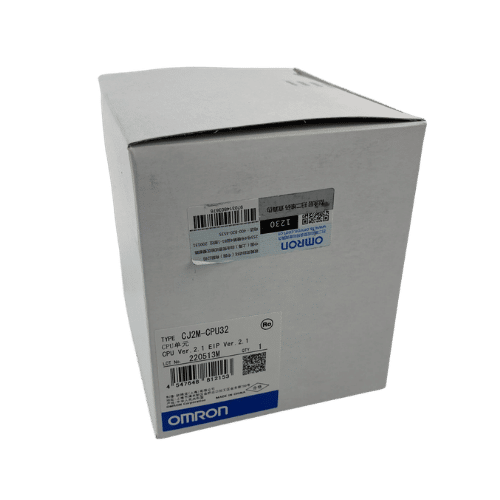
Omron CPU Unit CJ2M-CPU32
Omron PLC CJ1W-PA202 Supplier in China
Mitsubishi MR-JE Series 400w Servo Drive MR-JE-40A
Need a Fast Match?
Share your model or spec and our team will help you find the right fit-fast.
- Expert support
- Quick response
- Competitive price
- +86-755-81481609
- [email protected]
You May Also Find These Topics Interesting
Omron CJ2M PLC Error Codes and Network Troubleshooting
An Omron CJ2M can report a CPU error and a network error at the same time, but the two are not diagnosed
PLC Configuration Guide for Beginners
If you want to understand PLC configuration without getting lost in jargon, this guide will walk you through the parts, the logic,
What is a Timer in PLC, and How Does it Work?
What is a Timer in PLC, and How Does it Work? In the world of industrial automation, time is everything. Every process