
Mitsubishi MR-J4 AL.25: Absolute Position Loss and Battery Replacement Checks
Table of Contents
Mitsubishi identifies AL.25 as an absolute-position data fault. It can also appear during the first startup of an absolute position system, so the code alone does not establish a battery failure. The job is to find why the position information became invalid, correct that cause, and restore the machine’s reference before production resumes. See the MR-J4 Troubleshooting Manual.
This article focuses on battery-backed rotary-servo applications using MR-J4-A and MR-J4-B amplifiers. External scales and other feedback arrangements need their own applicable procedures.
Was There a Warning Before the Shutdown?
The alarm history is a useful starting point, especially if the machine ran normally before being switched off.
| Code | Classification | What it identifies |
|---|---|---|
| AL.9F.1 | Warning | Low battery |
| AL.92.1 | Warning | Encoder battery-cable disconnection warning |
| AL.25.1 | Alarm | Absolute-position data fault at the motor encoder |
| AL.25.2 | Alarm | Absolute-position data fault at the scale measurement encoder |
These are selected entries from Mitsubishi’s alarm and warning tables, not a complete list.
An earlier battery warning changes the investigation. Maintenance staff should establish whether it was addressed before the next shutdown. If the alarm followed work on the motor or amplifier instead, the connection history deserves equal attention.
Before anything is disconnected, save the detailed code and available history. Note the amplifier, motor and battery assembly references. A photograph of the installed arrangement can answer questions later that a handwritten “battery replaced” entry cannot.
- Related Product
Need a Replacement Altivar Drive?
Browse new original Altivar drives for maintenance, troubleshooting, and replacement projects.
- New original parts
- Fast response
- Global shipping
Why AL.25 Can Appear After Maintenance
An apparently straightforward service job can interrupt the encoder’s backup supply. The important question is what remained connected and powered while the work took place.
For AL.25.1, Mitsubishi lists interrupted battery connections, depleted batteries, cable problems and voltage drop among the possible causes. Its diagnostic sequence also covers amplifier and encoder faults. Replacing the motor should therefore follow evidence, rather than the alarm number alone.
Consider an illustrative example: a machine receives a replacement battery during a planned shutdown, then reports AL.25 on restart. Before rejecting the new battery, establish whether control power was off when the old battery was disconnected. That detail may explain the loss without proving that either battery was defective.
A machine returning from storage presents a different question. Here, battery age and the condition of the backup circuit deserve attention. For a recently transported motor, the investigation should include how the encoder connection was handled.
The useful maintenance record is a sequence: what was disconnected, which supplies were available, and when the alarm first appeared.
The Power Conditions for Battery Replacement Matter
“Replace with power on” is too vague to be a safe instruction.
For the MR-BAT6V1SET procedure, Mitsubishi specifies:
- Main-circuit power off.
- At least 15 minutes for discharge, with the charge lamp off.
- Verification of the voltage between P+ and N−.
- Control-circuit power kept on during battery replacement.
These requirements come from the Servo Battery Guide, page 2. The procedure requires qualified personnel working under the machine’s electrical safety arrangements.
Mitsubishi’s battery-replacement FAQ confirms that removing the battery with control power off can erase absolute position data. It describes replacement at CN4 and directs users to the relevant amplifier manual.
The distinction between main and control power must be established from the actual cabinet wiring. If the technician cannot safely maintain the required control supply while isolating the main circuit, the replacement plan needs resolving with the machine builder first.
This procedure applies to the specified battery work. It does not authorize encoder-cable removal, terminal work or general inspection with control power present.
- PLC Solutions
Find the Right PLC for Your System
Explore new original PLC CPUs, I/O modules, power supplies, and communication units for maintenance and automation projects.
- New original parts
- Fast response
- Global shipping
Order the Battery Assembly the Machine Actually Uses
An order described only as “MR-J4 battery” leaves room for an avoidable mistake.
MR-BAT6V1SET contains a replaceable MR-BAT6V1 battery. MR-BAT6V1BJ serves a junction-cable arrangement and does not have user-replaceable internal batteries. Other holders and configurations have separate instructions. Mitsubishi shows these distinctions in its supported-battery guide.
Identify whether the requirement is for the battery itself, a complete holder assembly or a junction-cable battery. Keep the full amplifier model alongside that information; a similar case or matching connector is not enough to select the part.
Battery age also belongs on the purchase record. “Unused” describes its service history, not its production date.
If the assembly reference is unclear, send Kwoco a photograph of its label and the amplifier nameplate. That gives a replacement inquiry a firmer starting point than the alarm code by itself.
Frequently Asked Questions
No. Mitsubishi explicitly excludes Q6BAT in its Servo Battery Guide. Use the specified battery assembly for the amplifier and backup arrangement. A battery already stocked for another Mitsubishi product should not be treated as interchangeable.
Mitsubishi gives a five-year limit from production and calls for replacement within three years of operation start, with storage conditions affecting battery quality. Apply both limits rather than counting three years from installation regardless of age. The battery-life notes should be read alongside the applicable amplifier manual.
It can. Mitsubishi describes a specific retention arrangement using MR-BAT6V1BJ with MR-BT6VCBL03M. Do not assume an ordinary battery installation provides the same protection. Plan the disconnection using the applicable instructions; the transport FAQ explains this distinction.
Not throughout. AL.25.2 concerns the scale measurement encoder, while AL.25.1 concerns the motor encoder. Start with the correct feedback device and its documentation. Replacing the motor’s battery without identifying the affected feedback system may leave the fault untouched.
Position restoration may still be outstanding, or the original fault may involve the backup connection, cable or another component. Establish whether the battery replacement corrected the diagnosed cause, then complete the specified recovery procedure. A new battery alone does not establish a valid machine reference. Mitsubishi separates these actions in its AL.25 troubleshooting sequence.
Power your projects with brand-new, original Omron, Mitsubishi, Schneider Servo – in stock, ready now!
Returning the Axis to Service
Once absolute position has been lost, changing the battery is only part of the repair.
Mitsubishi’s AL.25 table permits power cycling for alarm deactivation; ordinary alarm reset and CPU reset are marked unavailable. Its remedies call for home-position return after the relevant cause is corrected. Follow the applicable controller and machine procedure.
Prepare for that recovery before requesting motion. The technician needs to know where the approved mechanical datum is, whether the axis has a clear path to it, and how the machine builder expects the reference to be established.
A displayed zero is not sufficient evidence. Assigning zero to the current position merely to remove an offset can leave the control coordinates inconsistent with the mechanism.
For release back to production, use the machine’s acceptance procedure to verify the restored datum and the required movements. Where specified, include a controlled shutdown and restart to confirm position retention. Record the physical reference used and the test result—not just that the alarm disappeared.
If AL.25 returns, preserve the new history and investigate the unresolved cause. Repeated power cycling provides little useful evidence.
For codes outside this topic, refer to the broader Mitsubishi MR-J4 Servo Alarm Codes guide.
Contact Us
Just fill out your name, email address, and a brief description of your inquiry in this form. We will contact you within 24 hours.
Product Category
Hot Sale Products
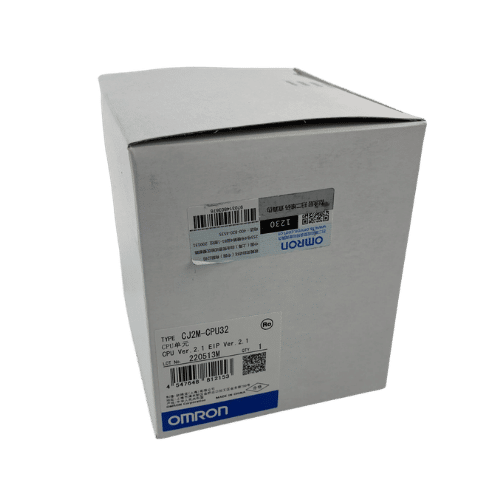
Omron CPU Unit CJ2M-CPU32

Omron PLC CJ1W-PA202 Supplier in China
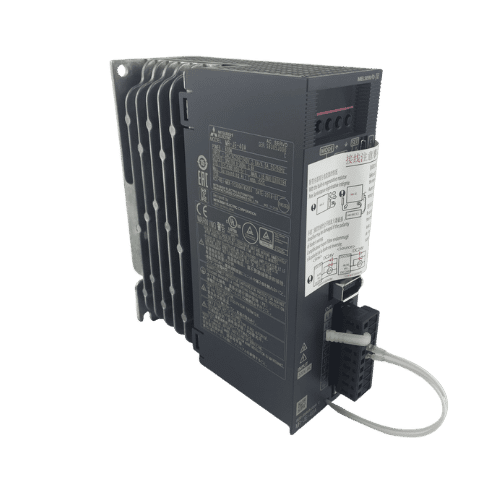
Mitsubishi MR-JE Series 400w Servo Drive MR-JE-40A
Need a Fast Match?
Share your model or spec and our team will help you find the right fit-fast.
- Expert support
- Quick response
- Competitive price
- +86-755-81481609
- [email protected]
You May Also Find These Topics Interesting
Understanding Photoelectric Sensors and Their Applications
Photoelectric sensors are ubiquitous in modern industrial automation, acting as the “eyes” of many systems. They provide crucial non-contact detection of objects,

What are the Three Types of Photoelectric Sensors?
What Are the Three Types of Photoelectric Sensors? When it comes to industrial automation, precision is key. But how can we ensure

Essential Guide to PLC Failures & Troubleshooting Techniques
Programmable Logic Controllers (PLCs) are vital in modern automation systems, serving as the backbone of countless industrial processes. Their role in managing