
Replacing Mitsubishi FX3U with FX5U: I/O, Wiring and Program Migration Checklist
Table of Contents
The work is easier to plan while the FX3U still runs. You can compare the saved project with the installed controller, record production settings, and investigate unfamiliar wiring before the shutdown.
This guide covers migration to FX5U. FX5UJ and FX5UC have their own hardware and configuration requirements; do not substitute them in the bill of materials without reviewing the design.
Choose the CPU from the Connected Equipment
Photograph the full FX3U model number and each attached module. Then check the drawings against the cabinet. Include communication boards and adapters that may be hidden beneath a cover or mounted beside the CPU.
Start the replacement specification with the supply voltage, input requirements, and output circuits. Relay outputs, sinking transistor outputs, and sourcing transistor outputs are different choices. A matching point count does not establish that the new PLC can operate the existing loads.
Count inputs and outputs separately, including those on expansion modules. Identify which points serve ordinary switches and valves, and which are used for encoders, pulse outputs, or other functions requiring specific hardware.
The 128-point FX3U illustrates why this matters. Mitsubishi lists this FX5U-based replacement for FX3U-128MR/ES:
FX5U-80MR/ES + FX5-32ER/ES + FX5-16ER/ES
That is a multi-module assembly, so the cabinet layout and wiring plan must accommodate it. This recommendation applies to the stated relay-output model, not every FX3U-128 variant. Mitsubishi FAQ 44617
- Related Product
Need a Replacement Altivar Drive?
Browse new original Altivar drives for maintenance, troubleshooting, and replacement projects.
- New original parts
- Fast response
- Global shipping
Make an I/O Map Before Moving Wires
Prepare a cross-reference that follows each field signal through the replacement:
| Record for each signal | What it helps establish |
|---|---|
| Equipment tag and function | Which sensor or actuator the wire serves |
| Existing PLC address and terminal | Where it is connected now |
| New module, terminal, and address | Where it will connect after migration |
| Signal type and supply | Whether the electrical interface is suitable |
| Common terminal and circuit protection | Which other loads share the circuit |
| Test result | Whether the physical signal matches the program |
Keep spare points in the record too. A terminal described as unused on an old drawing may have acquired a function during a later modification.
Where an address changes, follow that change beyond the ladder. Check HMI references, alarm logic, recipes, and external systems that read or write the affected device.
Plan for Rewiring at the PLC
Mitsubishi states that the FX3U and FX5U terminal blocks are not interchangeable. The handbook also highlights changed output-common arrangements when replacing an FX3U-16M unit. Treat common grouping and load limits as design checks before transferring wires. Transition Handbook, chapter 8, page 111
Trace each output circuit back to its supply. If the old installation uses separate supplies for different loads, establish whether the proposed grouping remains suitable. Do not bridge those supplies merely to match the new terminal arrangement.
On the input side, confirm the sensor wiring and the S/S connection. Mitsubishi identifies S/S as the sink/source input selection terminal. Use the wiring diagram for the selected CPU and sensor circuit rather than copying the physical position of the old jumper. Mitsubishi FAQ 22286
Before installation or wiring, isolate the relevant supplies under the site’s electrical-safety procedure. Follow the new module’s requirements for wire preparation, tightening torque, grounding, and terminal covers. Emergency-stop and protective circuits must retain their required independence from ordinary PLC operation.
- PLC Solutions
Find the Right PLC for Your System
Explore new original PLC CPUs, I/O modules, power supplies, and communication units for maintenance and automation projects.
- New original parts
- Fast response
- Global shipping
Review Expansion Modules One by One
Do not assume that every module beside the FX3U can move across with it. Mark each item in the equipment list as retain, replace, or redesign, with the relevant compatibility condition beside it.
For supported FX3 extension hardware, Mitsubishi provides bus conversion modules. FX5-CNV-BUS serves the cable-type connection arrangement; FX5-CNV-BUSC serves the connector-type arrangement, with additional connection requirements depending on the configuration. Their availability does not establish compatibility for an unlisted module. Mitsubishi iQ-F options
Module order also matters. Mitsubishi states that iQ-F modules cannot be added downstream of the bus conversion module; they belong before it.
For analog equipment, write down the signal range, scaling, filtering, and response expected by the machine. If a replacement channel produces a different raw value for the same physical measurement, that difference needs to be resolved before the value reaches a limit comparison or control calculation.
Check the completed assembly’s power requirements and physical layout before finalizing the order.
Save More Than the Ladder Program
Keep an unchanged copy of the original engineering project. Where access permits, compare it with the running PLC and collect the current parameters and operating data needed for recovery.
Production setpoints deserve particular attention. A project saved during commissioning may not contain the values the machine uses today. Record where those values come from: retained PLC devices, an HMI recipe, a supervisory system, or an initialization routine.
Confirm that the backup opens on the engineering computer intended for the migration. Locate the authorized passwords and required software before the shutdown. Preserve the original files separately from all conversion work.
Move the Project into GX Works3
Mitsubishi documents importing an FX3-series .gxw project through:
Project → Open Other Format File → GX Works2 Format → Open Project
Select the FX5U target as prompted and save the result as a separate project.
If the available project was created in GX Developer, GX Works2 provides an import route for that format. Establish a usable GX Works2 project before proceeding with the GX Works3 conversion.
Read the conversion results before editing away warnings. Mitsubishi’s migration handbook warns that instructions and devices may change, and parameter and intelligent-function-module settings require recreation in GX Works3.
Assign each warning or unresolved setting to a specific check. “Project converted” should mean the file is ready for engineering review—not that the machine is ready to run.
Give counters, timers, and communications their own review
Three items deserve an explicit search in the old project:
- C235–C255: FX3U high-speed counters require compatible-counter configuration and program changes for FX5U.
- T192–T199: Routine timers require parameter setup.
- Serial communication: Channel assignments can change; instructions and parameters must match the new arrangement.
These are documented migration conditions, not problems that disappear after a successful rebuild.
For each function, define a test that reflects its use. An encoder test should check the expected count and direction. A timed sequence should be observed through the relevant machine states. Communication testing should confirm the actual data exchange, including writes where authorized.
- HMI Replacement
Upgrade or Replace Your HMI
Find compatible HMI panels for discontinued models, machine upgrades, and operator interface replacement.
- New original parts
- Fast response
- Global shipping
Check What Survives a Power Cycle
Identify the values that must be retained and those that should initialize on startup.
Mitsubishi lists battery and parameter requirements for retaining specified device-memory or clock data on FX5U. Verify the retention method against the application instead of assuming that the old configuration has carried over. Mitsubishi iQ-F battery information
Include a controlled restart in acceptance testing. Check recipe selection, counters, offsets, and other retained values before and after it. Agree on the expected result in advance so that the test can reveal unintended initialization.
Frequently Asked Questions
No. Mitsubishi’s migration handbook identifies different terminal-block shapes. Plan the terminal connections and rewiring before removal.
It provides a project-conversion route, but the converted program, parameters, module settings, and machine behavior still require review and testing.
Complete the configuration first. The selected modules affect wiring, addressing, power requirements, cabinet space, and program settings.
Power your projects with brand-new, original Omron, Mitsubishi, Schneider PLC – in stock, ready now!
The Shutdown Checklist
Use this as a sign-off record, adding the machine-specific tests that matter to production.
| Check | Evidence needed before proceeding |
|---|---|
| CPU and expansion selection | Complete model numbers and an approved configuration |
| Electrical compatibility | Supply, input type, output type, common grouping, and load checks |
| I/O mapping | Each field signal traced to its new terminal and address |
| Recovery package | Original project, parameters, operating data, and rollback instructions |
| GX Works3 review | Conversion messages resolved and required settings recreated |
| Initial startup | Wiring inspection complete; hazardous motion controlled |
| Signal testing | Inputs and outputs checked against the I/O map |
| Application testing | Analog values, counting, timing, communications, and sequences verified |
| Restart testing | Retention and startup behavior match the agreed requirements |
| Handover | Final project, drawings, settings, and test results archived |
Perform commissioning under the machine’s approved procedure. Avoid ad hoc output forcing as a substitute for a planned test. Keep the original hardware and recovery files available until acceptance is complete.
For a hardware inquiry, send the complete FX3U model, module list, supply and output requirements, and proposed FX5U configuration. Kwoco’s Mitsubishi PLC range provides a starting point for sourcing discussions; establish program-conversion and commissioning responsibilities separately.
Contact Us
Just fill out your name, email address, and a brief description of your inquiry in this form. We will contact you within 24 hours.
Product Category
Hot Sale Products
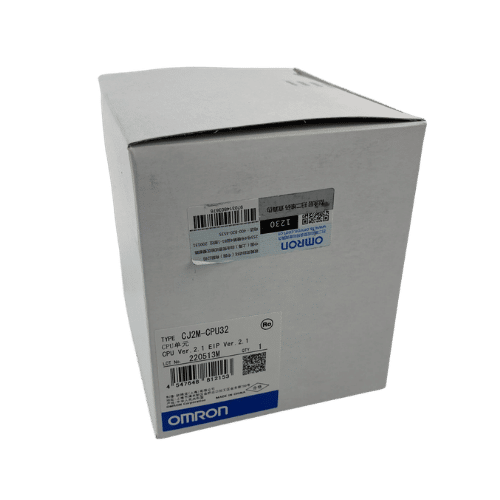
Omron CPU Unit CJ2M-CPU32
Omron PLC CJ1W-PA202 Supplier in China
Mitsubishi MR-JE Series 400w Servo Drive MR-JE-40A
Need a Fast Match?
Share your model or spec and our team will help you find the right fit-fast.
- Expert support
- Quick response
- Competitive price
- +86-755-81481609
- [email protected]
You May Also Find These Topics Interesting
What Is an Encoder? Basics of How It Works
Encoders are essential components in today’s automation and motion control systems. They convert motion to an electrical signal that can be read
How to Solve Servo Motor Overheating?
10 Essential Insights About OMRON PLC CJ2 Series Overheating issues with servo motors can disrupt operations and cause unnecessary downtime, leaving you
24VDC vs 120VAC: Understanding the Differences in Automation
When selecting control voltages for industrial automation, two common choices are 24VDC and 120VAC. But how do you decide which one is