
Omron vs Mitsubishi PLC: Which One Should You Choose?
Table of Contents
For a small standalone machine, the decision may come down to the built-in I/O, serial ports, Ethernet functions, and expansion limits of an Omron CP2E or Mitsubishi MELSEC iQ-F CPU. For a coordinated servo machine, the more important question is whether the project fits Omron’s Sysmac and EtherCAT architecture or Mitsubishi’s GX Works3, CC-Link IE TSN, SSCNET, and MELSERVO ecosystem.
There is no technically honest answer that says one brand is always faster, easier, cheaper, or more reliable. Those conclusions change with the exact CPU model, software version, network, options, country, and experience of the maintenance team.
This guide shows where each platform tends to fit and how to make the choice without relying on brand preference alone.
Omron vs Mitsubishi PLC at a Glance
| Selection area | Omron | Mitsubishi Electric |
|---|---|---|
| Compact PLC direction | CP2E and established CP-series platforms for small and medium machines | MELSEC iQ-F FX5 family with extensive built-in and expansion functions |
| Machine automation direction | NX and NJ machine automation controllers | MELSEC iQ-F and modular MELSEC iQ-R systems |
| Current engineering software | CX-Programmer for CP/CJ/CS; Sysmac Studio for NX/NJ | GX Works3 for MELSEC iQ-F and iQ-R; GX Works2 remains relevant to many Q/L/older FX systems |
| Motion architecture | EtherCAT-based motion on NX/NJ, with axis capability determined by CPU | Pulse positioning, SSCNET III/H, or CC-Link IE TSN depending on CPU and motion hardware |
| Main Ethernet ecosystem | EtherNet/IP for machine and plant communication; EtherCAT for deterministic machine control | SLMP, Modbus TCP, CC-Link IE Field Network Basic, CC-Link IE TSN, plus protocol modules depending on platform |
| Safety direction | NX safety controllers and safety I/O with FSoE and, on supported systems, CIP Safety | FX5 safety extension for defined compact functions; iQ-R safety CPUs and safety communication for larger systems |
| Best first question | Does the application benefit from Sysmac, EtherCAT, and the wider Omron machine-automation stack? | Does it benefit from MELSEC, MELSERVO, Mitsubishi drives/HMIs, or CC-Link integration? |
This table compares platform direction, not every product. Always verify the exact order code. Two CPUs in the same family can differ in I/O type, axis count, memory, communication ports, safety support, and licensed functions.
Which Product Families Are Being Compared?
For a new project, the most relevant comparisons are usually:
- Small machines: Omron CP2E versus Mitsubishi FX5S, FX5UJ, FX5U, or FX5UC
- Compact machine automation: Omron NX1P versus Mitsubishi FX5U/FX5UC with the required positioning or motion hardware
- Mid-range motion and data applications: Omron NX102 or NJ versus Mitsubishi iQ-F motion solutions or an entry MELSEC iQ-R configuration
- Large, high-axis, safety, or line-control systems: higher-capacity Omron NX controllers versus MELSEC iQ-R PLC, Motion, Safety, and network configurations
Many factories still operate Omron CP1, CJ2, and CS controllers or Mitsubishi FX3, Q, and L Series PLCs. They remain important for maintenance, but they should not automatically define a new-machine specification.
Product lifecycle must be checked model by model. For example, Mitsubishi has announced production discontinuation for some MELSEC-Q CPU models while continuing to support other Q products and publishing iQ-R migration information. A family name alone does not reveal whether a particular CPU or module is current, discontinued, or approaching the end of repair support.
Regional catalogs also differ. Confirm availability, approvals, repair support, software, and training with the manufacturer’s office or authorized channel serving the destination country.
1. Compact PLCs: CP2E or MELSEC iQ-F?
For a conveyor, small packaging machine, pump skid, assembly fixture, or simple process unit, both platforms can be practical. The correct comparison is between complete configurations, not CPU prices.
Where Omron CP2E Fits
Omron positions the CP2E as a micro PLC for small to medium machines and machine-to-machine data collection. Depending on the CPU variant, the family offers built-in I/O, Ethernet, serial communication, USB, option boards, and expansion I/O.
CP2E is a sensible candidate when:
- The plant already maintains CP, CJ, or CS programs with CX-Programmer
- The machine uses straightforward sequence control and moderate I/O
- EtherNet/IP or serial communications are required on the selected CPU
- Existing Omron function blocks, addressing knowledge, and maintenance practices can be reused
- A familiar ladder-oriented platform is more valuable than integrated multi-axis motion
Do not assume that every CP2E CPU has two Ethernet ports or every serial option. Omron’s specifications use different CPU types and suffixes. Check the exact model, built-in I/O, transistor or relay outputs, port arrangement, and supported expansion units.
Where Mitsubishi iQ-F Fits
The MELSEC iQ-F family includes several compact CPU levels. The FX5U and FX5UC are particularly flexible when a machine needs built-in high-speed counters, positioning outputs, Ethernet, serial communication, analog I/O on applicable models, or a path to additional motion and network modules.
MELSEC iQ-F is a sensible candidate when:
- The machine already uses Mitsubishi inverters, servo amplifiers, or GOT HMIs
- Built-in high-speed and positioning functions can eliminate separate modules
- The plant standard is GX Works3 and MELSEC device addressing
- CC-Link IE Field Network Basic, SLMP, Modbus, or Mitsubishi drive communication is required
- The design may grow from basic logic into simple motion or expanded networking
Again, the suffix matters. Built-in analog I/O is not identical across the FX5 family. High-speed pulse positioning requires suitable transistor-output hardware. Module compatibility and maximum system configuration differ between FX5S, FX5UJ, FX5U, and FX5UC.
Compact PLC Verdict
Choose CP2E when the application is primarily logic and communication, and the plant benefits from the Omron CP/CJ software and maintenance environment.
Choose an FX5 CPU when its built-in high-speed, analog, serial, Ethernet, positioning, or Mitsubishi-drive functions reduce the total system and align with the plant standard.
Neither is automatically the lower-cost option. Price the CPU, expansion units, option boards, terminal blocks, communications, software, programming cable, and engineering time as one BOM.
- Related Product
Need a Replacement Altivar Drive?
Browse new original Altivar drives for maintenance, troubleshooting, and replacement projects.
- New original parts
- Fast response
- Global shipping
2. Programming Software and Engineering Workflow
Software differences often affect the project more than instruction execution time.
Omron: Two Main Software Generations
Omron’s established CP, CJ, and CS PLCs are programmed with CX-Programmer, normally supplied through the CX-One environment. Engineers familiar with CIO, Work, Holding, Data Memory, and other memory areas can maintain these platforms efficiently.
NX and NJ controllers use Sysmac Studio. The Sysmac environment is designed to configure, program, simulate, commission, and monitor machine automation functions in one engineering workflow. It uses IEC-style variables, data types, tasks, function blocks, and integrated configuration for EtherCAT, motion, safety, and other supported devices.
Moving from CP/CJ to NX/NJ is therefore not just a CPU upgrade. The programming model, tag structure, task execution, project organization, and software environment change.
Mitsubishi: GX Works3 and Legacy Projects
GX Works3 is Mitsubishi Electric’s current engineering software for MELSEC iQ-F and iQ-R. It provides graphical system configuration, module parameters, labels, function blocks, structured programming, diagnostics, and integrated setup for supported motion hardware.
GX Works2 remains relevant for many MELSEC-Q, L, and older FX projects. Moving a machine from Q or L to iQ-R, or from older FX to iQ-F, may allow some project conversion, but it still requires review of devices, instructions, modules, network parameters, and physical hardware.
Which Software Is Easier?
There is no objective winner for every team.
CX-Programmer can feel direct to technicians maintaining traditional ladder and fixed memory areas. Sysmac Studio is better aligned with variable-based machine automation and integrated EtherCAT projects. GX Works3 is comfortable for teams standardizing on modern MELSEC while retaining access to familiar device-based logic where appropriate.
Before choosing, run a small proof of concept in both environments. Include the actual tasks that consume engineering time:
- Configure the CPU and I/O
- Create and monitor a reusable function block
- Commission one servo or VFD
- Diagnose a disconnected remote-I/O station
- Connect the HMI and exchange structured data
- Back up and restore the complete project
- Compare online changes and version history
The software that lets your team diagnose a stopped machine at 2 a.m. is more valuable than the software that looks best in a demonstration.
3. Motion Control: EtherCAT vs Mitsubishi Motion Networks
Motion is one of the clearest architectural differences between the platforms.
Omron NX/NJ Motion
Omron’s NX and NJ machine automation controllers use EtherCAT for deterministic motion and distributed I/O. Depending on the exact CPU, the system can control independent point-to-point axes, synchronized axes, electronic gears and cams, or larger coordinated applications.
This architecture is attractive when:
- EtherCAT is already the machine network
- Omron 1S servo systems or compatible EtherCAT devices are being used
- Logic, motion, safety, and high-speed I/O should share the Sysmac engineering environment
- The machine uses registration, camming, synchronized conveyors, winding, cutting, or robotic functions
- Multi-vendor EtherCAT device support is important and verified for the selected products
Axis counts vary substantially by CPU. Even within the NX1P family, models differ in servo and synchronized-axis capability. The NX102 and higher NX controllers also have multiple CPU variants. Select from the official datasheet using total axes, synchronized axes, EtherCAT nodes, cycle time, and required motion functions.
Mitsubishi Motion
Mitsubishi offers several levels of motion control rather than one universal architecture.
An FX5 transistor-output CPU can perform built-in pulse positioning for a limited number of axes. MELSEC iQ-F can also use positioning, Simple Motion, SSCNET III/H, and CC-Link IE TSN-related modules depending on the CPU and required functions.
MELSEC iQ-R scales further with dedicated Motion CPUs and motion modules. Mitsubishi’s current MELSERVO-J5 portfolio includes CC-Link IE TSN and SSCNET III/H interfaces on applicable amplifier models.
This architecture is attractive when:
- The machine already uses Mitsubishi servo amplifiers and motors
- Existing SSCNET projects or engineering knowledge should be retained
- CC-Link IE TSN is the machine’s synchronized control and safety network
- The application needs a path from compact pulse positioning to high-axis motion
- Mitsubishi drive diagnostics and commissioning tools are already standardized
Motion Verdict
Omron is often the more direct candidate for a new machine designed around EtherCAT and Sysmac from the start.
Mitsubishi is often the more direct candidate when the machine is built around MELSERVO, existing SSCNET assets, or CC-Link IE TSN.
Do not choose from network names alone. Build an axis table and compare the exact controller, drive, cycle, cam, registration, interpolation, safety, and diagnostic requirements. A gateway cannot turn a non-deterministic connection into a coordinated motion system.
- PLC Solutions
Find the Right PLC for Your System
Explore new original PLC CPUs, I/O modules, power supplies, and communication units for maintenance and automation projects.
- New original parts
- Fast response
- Global shipping
4. Industrial Networks and Third-Party Devices
Network compatibility should be checked device by device.
Omron Network Direction
On current machine-automation platforms, Omron commonly combines:
- EtherCAT for deterministic motion, synchronized I/O, and safety over EtherCAT on supported systems
- EtherNet/IP for controllers, HMI, robots, plant communication, and CIP-based devices
- OPC UA, SQL, or MQTT on selected controller models and configurations for higher-level data exchange
- Serial options where legacy instruments still require RS-232 or RS-485
This can be a strong fit in plants where EtherNet/IP is standard but a dedicated EtherCAT machine network is acceptable for motion.
Mitsubishi Network Direction
Mitsubishi’s current platforms commonly use:
- SLMP and MELSOFT communication for Mitsubishi controller and engineering access
- CC-Link IE Field Network Basic for software-based cyclic communication on supported Ethernet ports
- CC-Link IE TSN for integrated real-time control, motion, and safety on supported products
- SSCNET III/H for established optical servo systems
- Modbus TCP/RTU, socket communication, and inverter communication on applicable iQ-F configurations
- EtherNet/IP, PROFINET, OPC UA, and other protocols through supported iQ-R or iQ-F modules where available
This can be a strong fit where CC-Link and Mitsubishi drive networks are already plant standards.
The Protocol Checklist
For every third-party HMI, robot, vision sensor, VFD, remote-I/O coupler, and MES connection, record:
- Exact protocol and device role
- Required scanner/master, adapter/slave, client, or server function
- Number of cyclic and message connections
- Update time and data size
- Device description file or ESI/EDS/GSDML requirement
- Supported firmware and engineering-software version
- Security and certificate requirements
An Ethernet port does not guarantee support for the protocol role you need. Verify the CPU manual and device compatibility list before ordering.
5. Safety Control
Safety selection must follow the machine risk assessment. Do not choose a safety system because one vendor’s brochure lists a higher SIL or PL.
Omron Safety Architecture
Omron NX safety controllers and safety I/O can integrate with NX/NJ machine-control architectures. Supported solutions include Safety over EtherCAT (FSoE), and some configurations support CIP Safety over EtherNet/IP. Sysmac Studio can manage standard and safety projects in the same broader engineering environment.
This is useful for machines with distributed safety I/O, many guard zones, safe motion, or a need for detailed diagnostics.
Mitsubishi Safety Architecture
For compact MELSEC iQ-F systems, Mitsubishi offers FX5 safety extension modules with predefined safety programs for supported FX5 CPUs. This approach fits a limited set of compact safety functions and is not equivalent to a freely programmable large safety PLC.
For larger systems, MELSEC iQ-R offers safety CPUs, safety I/O, and safety communication over supported CC-Link IE networks. Standard and safety control can be engineered in GX Works3 on applicable configurations.
Safety Verdict
Compare the required safety functions, number of safe I/O, network topology, safe-motion requirements, diagnostics, validation tools, and local safety expertise.
The PLC brand is only one component. The complete safety function includes sensors, logic, outputs, drives, contactors, pneumatics, wiring, software, verification, and validation.
- HMI Replacement
Upgrade or Replace Your HMI
Find compatible HMI panels for discontinued models, machine upgrades, and operator interface replacement.
- New original parts
- Fast response
- Global shipping
6. HMI, Vision, Servo, and Drive Ecosystems
Both vendors sell much more than PLCs. Ecosystem fit can reduce integration work, but it should be measured rather than assumed.
When the Omron Ecosystem Helps
Omron offers controllers, NX I/O, safety components, machine vision, sensors, barcode and traceability products, HMIs, robots, and servo systems. A Sysmac project can integrate many supported machine-automation components within a common architecture.
This may shorten commissioning when the machine requires EtherCAT motion, Omron safety, and Omron sensing or vision products. Confirm which devices are configured directly in Sysmac Studio and which still require their own tools.
When the Mitsubishi Ecosystem Helps
Mitsubishi offers MELSEC controllers, GOT HMIs, MELSERVO systems, inverters, robots, remote I/O, and CC-Link network products. GX Works3 and the wider MELSOFT environment support integrated configuration for many Mitsubishi components.
This may reduce risk where the machine already uses Mitsubishi servos, inverters, GOT screens, and proven function blocks. It is especially relevant when the customer’s spares and technicians are already organized around those products.
Can You Mix Brands?
Yes, when both devices support a compatible protocol and the required functions. A third-party HMI can often communicate with either PLC, and a PLC can control third-party drives or I/O through supported networks.
However, basic communication is not the same as full integration. Auto-configuration, detailed diagnostics, safety certification, motion synchronization, parameter backup, and replacement workflows may be better within a validated ecosystem.
7. Maintenance, Spare Parts, and Lifecycle
For most factories, maintenance capability should be one of the top three selection criteria.
Ask:
- Which software and versions are already licensed?
- Can technicians connect without an obsolete programming cable?
- Does the plant have the editable source project and passwords?
- Are CPU, power, I/O, network, HMI, servo, and battery spares held locally?
- Is the proposed model current in the destination country?
- How long will repair support remain available?
- Can the local team diagnose the network and motion system?
- Does the OEM provide a tested backup and restore procedure?
If a plant has 100 Mitsubishi machines and trained GX Works technicians, introducing one Omron controller needs a clear technical benefit. The same is true in an Omron-standard plant considering Mitsubishi.
Standardization reduces software, training, spare-parts, and troubleshooting costs. It should be overridden only when the standard platform cannot meet a real machine requirement or when the alternative provides a measured lifecycle advantage.
For an obsolete controller, Kwoco can help identify the exact CPU, I/O, communication module, cable, battery, HMI, drive, and available replacement path. Send the complete model numbers, program-software version, cabinet photos, I/O list, network diagram, and current backup. Cross-brand replacement cannot be selected safely from the CPU name alone.
8. Migration Between Omron and Mitsubishi
Replacing an Omron PLC with Mitsubishi, or Mitsubishi with Omron, is normally a control-system migration rather than a drop-in swap.
The following items may need redesign or conversion:
- PLC program and instruction set
- Memory map, variables, retentive data, and recipes
- I/O addressing and terminal wiring
- Power supply and module arrangement
- HMI driver and tag addresses
- Servo commands, cam profiles, and homing logic
- Safety program and validation documentation
- Network protocols, node settings, and device files
- Analog scaling and temperature-input behavior
- Startup, fault recovery, and machine-state sequences
Mitsubishi Electric Engineering publishes conversion products for certain old Omron SYSMAC C-series systems to specific MELSEC platforms. That is a special hardware migration route, not proof that modern Omron and Mitsubishi PLCs are generally interchangeable.
For any migration, keep the original machine operational until the new program has been tested. Back up the PLC, HMI, drive parameters, recipes, safety project, and network settings before disconnecting hardware. Perform I/O checkout, dry-cycle testing, safety validation, and production acceptance as separate stages.
9. Total Cost of Ownership
Do not compare only the CPU purchase price.
Include:
- CPU, power supply, local I/O, terminal bases, and expansion hardware
- Communication, motion, safety, and special-function modules
- Servo drives, motors, cables, and feedback components
- HMI, remote I/O, switch, and gateways
- Engineering and runtime software licenses
- Development, simulation, commissioning, and validation time
- Training, documentation, and source-code delivery
- Recommended spares and replacement lead time
- Expected machine downtime during recovery
One platform may have a lower CPU price but need extra modules. Another may have a higher initial BOM but save engineering time because the required motion and safety tools are already integrated.
Request a complete quotation for two technically equivalent architectures. Make sure both include the same axis functions, protocol roles, safety scope, I/O headroom, software, and support. Otherwise, the comparison is meaningless.
When Should You Choose Omron?
Omron is usually the more natural choice when several of these conditions apply:
- The plant is already standardized on Omron and has CX-Programmer or Sysmac expertise
- The new machine will be designed around EtherCAT motion and EtherNet/IP plant communication
- Logic, motion, safety, high-speed I/O, and machine data should be integrated in Sysmac
- Omron vision, sensing, safety, robotics, or 1S servo products are part of the validated design
- A supported NX or NJ CPU matches the exact synchronized-axis and data requirements
Do not choose NX/NJ only because the application uses one EtherCAT device. For a simple machine, CP2E or another compact platform may be more maintainable and economical.
When Should You Choose Mitsubishi?
Mitsubishi is usually the more natural choice when several of these conditions apply:
- The plant is already standardized on MELSEC and GX Works
- The machine uses Mitsubishi inverters, MELSERVO amplifiers, GOT HMIs, or robots
- An FX5 CPU’s built-in I/O, Ethernet, serial, analog, high-speed, or positioning functions suit the machine
- CC-Link IE Field Network Basic, CC-Link IE TSN, or SSCNET is the established architecture
- The project needs a scalable path from a compact iQ-F machine to a modular iQ-R system
- An older Mitsubishi machine is being migrated using official iQ-F/iQ-R transition guidance
Do not choose iQ-R simply because it is the higher-end family. An FX5 system may meet the requirement with less panel space and engineering overhead.
A Practical Selection Scorecard
Score each category from 0 to 5 for both proposed systems. Weight the non-negotiable items more heavily.
| Criterion | Weight | Omron score | Mitsubishi score |
|---|---|---|---|
| Exact I/O and special-function fit | 5 | ||
| Worst-case logic and response performance | 5 | ||
| Motion functions and compatible drives | 5 | ||
| Safety architecture and validation | 5 | ||
| Required protocol roles and connection capacity | 5 | ||
| Plant software and technician skills | 4 | ||
| Diagnostics and backup/restore | 4 | ||
| Local supply, support, and lifecycle | 4 | ||
| Reuse of existing code and standards | 3 | ||
| Complete installed cost | 3 | ||
| Future expansion | 3 |
Reject any system that fails a mandatory motion, safety, protocol, environmental, or regulatory requirement, regardless of its total score.
Then build a small proof of concept. Test the fastest input, one representative axis, HMI communication, a remote-I/O failure, data exchange, and a full backup/restore. A short bench test often reveals more than another week of brochure comparison.
Frequently Asked Questions
Neither is universally easier. Omron CP/CJ/CS users work mainly in CX-Programmer, while NX/NJ users work in Sysmac Studio; Mitsubishi iQ-F and iQ-R use GX Works3. The easiest platform is usually the one your team already understands, so test CPU setup, function blocks, online monitoring, diagnostics, and backup before deciding.
Both support advanced motion, but their native architectures differ. Omron NX/NJ commonly uses EtherCAT and Sysmac, while Mitsubishi uses pulse positioning, SSCNET III/H, or CC-Link IE TSN depending on the platform. Compare exact synchronized-axis counts, cycle time, camming, registration, safe motion, and compatible drives.
Generally, no. The program, addressing, I/O hardware, communications, HMI tags, motion, and safety configuration may all differ. Some official conversion adapters exist for specific legacy systems, but a cross-brand replacement still requires engineering, testing, and validation.
Compare an exact Omron CP2E configuration with the appropriate Mitsubishi FX5 CPU. CP2E is attractive for straightforward logic in an Omron maintenance environment; FX5 can be attractive when its built-in high-speed, analog, serial, Ethernet, positioning, or Mitsubishi-drive functions reduce the BOM. The required suffix and options decide the result.
There is no dependable brand-wide answer. Regional prices and discounts change, and equivalent systems may require different modules and software. Compare the complete BOM, engineering licenses, commissioning time, training, spares, lifecycle, and downtime risk rather than CPU price alone.
Power your projects with brand-new, original Omron, Mitsubishi, Schneider PLC – in stock, ready now!
Final Verdict
Choose Omron when your project is naturally built around Sysmac, EtherCAT motion, EtherNet/IP, and Omron’s machine-automation components.
Choose Mitsubishi when the machine benefits from MELSEC iQ-F/iQ-R, GX Works3, Mitsubishi drives and servos, or CC-Link/SSCNET integration.
For a brownfield machine, give strong weight to the installed base, source-code availability, maintenance skills, spare parts, and official migration path. For a greenfield machine, compare two complete architectures against the same I/O, timing, motion, safety, and data specification.
The right PLC is the one your machine can run, your engineers can commission, and your maintenance team can recover without improvisation.
Official References
Contact Us
Just fill out your name, email address, and a brief description of your inquiry in this form. We will contact you within 24 hours.
Product Category
Hot Sale Products
Omron CPU Unit CJ2M-CPU32
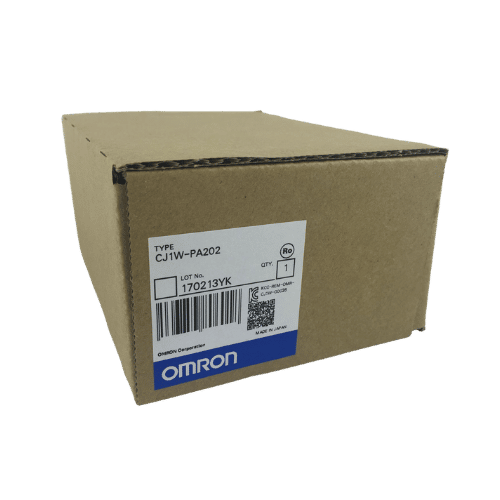
Omron PLC CJ1W-PA202 Supplier in China
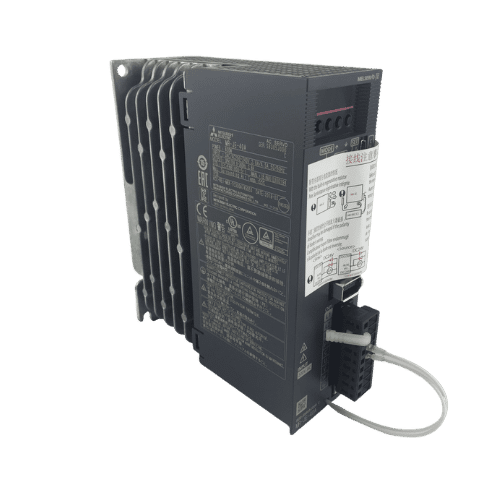
Mitsubishi MR-JE Series 400w Servo Drive MR-JE-40A
Need a Fast Match?
Share your model or spec and our team will help you find the right fit-fast.
- Expert support
- Quick response
- Competitive price
- +86-755-81481609
- [email protected]
You May Also Find These Topics Interesting
Exactly how to Check if an Omron PLC Is New and Original
Purchasing an Omron PLC is generally not a laid-back purchase. Oftentimes, it is for a running device, a plant upkeep job, a

Top Six Omron PLC Suppliers in Italy
Top Six Omron PLC Suppliers in Italy As someone deeply involved in the industrial automation sector, particularly in international trade of automation
Why Signal Isolation is Crucial for Omron PLCs?
Why Signal Isolation is Crucial for Omron PLCs? In the world of industrial automation, signal interference is a silent killer. It sneaks