
Weintek HMI Slow to Update? Diagnose Tag and Communication Delays
Table of Contents
A responsive touchscreen does not prove that its PLC data is fresh. Likewise, a slow trend does not necessarily mean that ordinary numeric displays are updating slowly.
This guide covers a practical diagnostic approach for EasyBuilder Pro projects. Available settings and diagnostic tools depend on the HMI series, software version, and selected communication driver.
1. Identify What Is Actually Slow
Choose one affected value and follow it from its source to the screen. Confirm the exact device, address or tag, data type, and any intermediate calculation.
For example, a displayed temperature might come directly from a PLC register—or from a local HMI register that a macro updates periodically. Those paths require different checks.
| Observation | Investigate first | Useful comparison |
|---|---|---|
| The value changes late in the PLC programming software | Source measurement and PLC logic | Input value versus the register the HMI reads |
| The PLC value changes promptly, but the HMI receives it late | Communication requests and responses | PLC observation versus HMI diagnostic data |
| HMI diagnostic data changes promptly, but one object remains stale | Object address, conversion, or intermediate data path | Direct source value versus displayed value |
| A numeric display updates promptly, but a trend changes slowly | Data sampling and trend configuration | Live value versus recorded samples |
| The physical panel is responsive, but a remote view is delayed | Remote viewing connection and client | Local and remote views of the same event |
These observations narrow the investigation; they do not independently prove a cause.
Use an existing, safely changing process value or an approved diagnostic signal. Do not force outputs or trigger machine movement merely to measure screen response.
2. Establish a Repeatable Baseline
Before modifying the project, save a backup and record:
- HMI model, runtime or firmware version, and EasyBuilder Pro version.
- PLC model, communication driver, and Ethernet or serial connection.
- Affected screen, object, address, and data type.
- Whether the object reads the PLC directly or uses an HMI local register.
- Whether the delay affects one value, one device, one screen, or the entire project.
- When the problem occurs: startup, screen changes, normal production, or communication recovery.
Observe the same value change several times under comparable operating conditions. A recording that shows both observations can help establish the sequence.
Treat timings from separate software windows cautiously: each monitor has its own refresh behavior. Do not subtract timestamps from unsynchronized devices and present the result as precise communication latency.
The immediate goal is to find which stage falls behind, then measure that stage more closely.
- Related Product
Need a Replacement Altivar Drive?
Browse new original Altivar drives for maintenance, troubleshooting, and replacement projects.
- New original parts
- Fast response
- Global shipping
3. Inspect Communication Before Adjusting Refresh Settings
On supported cMT-family devices, cMT Diagnoser can help inspect object data and communication activity. Weintek’s documentation describes viewing object values and monitoring additional addresses; use these capabilities in a read-only diagnostic workflow. See the official cMT Diagnoser introduction.
Compare the affected object’s address, data type, length, and value with the intended PLC source. In the available packet view, look for failed requests and determine which device or address is involved.
A Polling status means a request is awaiting a response. It is not, by itself, proof that the HMI processor is overloaded. Weintek also notes that an invalid object address can produce a communication error while other objects continue working. See Weintek USA’s communication diagnostics guide.
If your HMI does not support these tools, use the applicable driver diagnostics, PLC monitoring tools, and an approved communication capture method.
Resolve Failed Requests First
Look for a relationship between stale values and:
- Requests to an unavailable device.
- Invalid addresses or unsupported data ranges.
- Responses that arrive inconsistently.
- Communication errors appearing during the slowdown.
Depending on driver scheduling, waiting for failed requests can affect other updates. Confirm that relationship through observation rather than assuming one failed tag slows every device.
If the panel reports connection failures, start with the Weintek PLC no-response troubleshooting guide before tuning performance.
4. Understand What Each Setting Controls
Several settings influence communication behavior, but they serve different purposes.
| Setting | What it controls | What to check before changing it |
|---|---|---|
| Communication timeout | How long a request can wait before being treated as unanswered | Whether responses are genuinely late or never arrive |
| Turn around delay | A wait before sending the next command | Why the delay was configured and whether the device requires pacing |
| Interval of block pack (words) | Address spacing used when combining eligible reads | Whether intervening addresses are valid |
| Max. read-command size (words) | Maximum data size requested in one read command | Driver and target-device limits |
| Data Sampling interval | Frequency of time-based sampling | Whether the complaint concerns records or a live object |
“Interval of block pack” is an address-gap setting measured in words, not a screen-refresh interval. Weintek documents it alongside maximum read-command size in EasyBuilder Pro V6.10.01, Chapter 5, page 5-7.
Increasing a read block can include addresses between the values you need. Check that the device supports the entire requested range before combining reads more aggressively.
- PLC Solutions
Find the Right PLC for Your System
Explore new original PLC CPUs, I/O modules, power supplies, and communication units for maintenance and automation projects.
- New original parts
- Fast response
- Global shipping
Turn Around Delay Has a Wider Effect
In an official response about Modbus object polling on an MT8071iP, Weintek USA explains that adding turn around delay reduces communication load and affects all objects using the selected driver. An excessive delay can also cause communication problems. See How can I adjust object data polling rate?
Do not treat this setting as an independent refresh control for one numeric display. Record its original value, understand the connected device’s requirements, and test changes under controlled conditions.
5. Compare Screen Load and Background Activity
A useful controlled test is to compare the affected screen with a simple diagnostic screen containing a direct display of the same source value.
If the simple screen updates more promptly, investigate the workload associated with the original screen. If both remain slow, continue checking shared communication and background activity.
A blank screen does not necessarily remove the project’s communication load. Weintek identifies alarms, data sampling, macros, and global data transfers as possible background communication sources. These can continue when their associated information is not visible.
Review the project for unnecessary reads, oversized arrays or strings, and intermediate copies that update less frequently than expected. Count actual communication activity where possible; the number of graphical objects alone is an unreliable measure of workload.
Perform isolation tests in a controlled project copy or approved maintenance environment. Preserve required alarms and protective functions throughout testing.
6. Separate Sampling Delays From Live Display Delays
A trend based on sampled records follows its data-sampling configuration. It does not necessarily change whenever a directly addressed numeric object changes.
Check whether sampling is time-based or trigger-based, which address supplies the records, and whether the expected trigger occurs.
Weintek also warns that enabling too many high-priority sampling processes can slow other objects. This warning appears in the eMT, iE, XE, mTV, and iP section of the V6.10.01 manual; check the options applicable to your own series. See Chapter 8: Data Sampling, pages 8-2–8-6.
Shortening the sampling interval increases the requested recording frequency. It does not automatically correct stale source data or improve communication.
- HMI Replacement
Upgrade or Replace Your HMI
Find compatible HMI panels for discontinued models, machine upgrades, and operator interface replacement.
- New original parts
- Fast response
- Global shipping
7. Trace Macros, Transfers, and Local Registers
If communication diagnostics show fresh source data but the displayed value remains old, trace the object’s complete data path.
For an object linked to an HMI local register, determine:
- Which macro, transfer, or calculation writes that register.
- What starts that operation.
- Whether its execution depends on a screen, condition, or trigger.
- Whether another operation overwrites the result.
Compare the original PLC value with the intermediate register. If the source is fresh and the intermediate value is stale, focus on that update mechanism before changing PLC communication settings.
Also check display scaling and precision. A slowly changing value may appear unchanged because the object shows fewer decimal places than the source contains.
Frequently Asked Questions
No single setting is appropriate for every project. The required response depends on the application, communication driver, connected device, requested data, and how the displayed value is produced. Establish an acceptable response for the relevant operator task, then verify it on the actual system.
No. Simulation can help check project behavior, but the computer, communication path, and runtime environment differ from the installed panel. Use it to narrow the investigation, then confirm performance on the target hardware.
Only when evidence shows that valid responses need more time. A longer timeout does not increase polling speed. If a device never responds, it may extend the wait before the failure is recognized.
Power your projects with brand-new, original Omron, Mitsubishi, Schneider PLC – in stock, ready now!
8. Change One Cause and Verify the Result
Choose corrective action from the evidence:
| Confirmed finding | Appropriate next action |
|---|---|
| The PLC source itself changes late | Investigate the source and PLC logic |
| Requests repeatedly fail | Correct the device, address, or connection problem |
| A configured inter-command delay dominates waiting time | Review its necessity and adjust within device requirements |
| Read requests are fragmented | Evaluate valid contiguous reads within supported limits |
| An intermediate HMI register updates infrequently | Correct its macro or transfer conditions |
| Recorded samples are too sparse | Review sampling requirements and configuration |
Retest the same value, screen, and operating conditions after each change. Check both normal operation and the conditions that originally exposed the delay.
A successful result should show fresher values without introducing communication errors, missing records, or unreliable controls. Faster screen animation alone is insufficient.
If testing identifies a hardware limitation or failed panel, provide Kwoco with the exact HMI model, PLC model, communication interface, and project requirements when discussing replacement sourcing. Confirm project compatibility before selecting a substitute.
Contact Us
Just fill out your name, email address, and a brief description of your inquiry in this form. We will contact you within 24 hours.
Product Category
Hot Sale Products
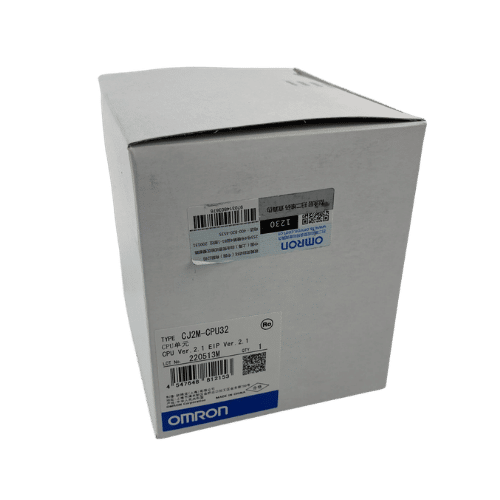
Omron CPU Unit CJ2M-CPU32
Omron PLC CJ1W-PA202 Supplier in China
Mitsubishi MR-JE Series 400w Servo Drive MR-JE-40A
Need a Fast Match?
Share your model or spec and our team will help you find the right fit-fast.
- Expert support
- Quick response
- Competitive price
- +86-755-81481609
- [email protected]
You May Also Find These Topics Interesting

Recommended Omron PLC Suppliers in the UK: How to Find a Reliable Partner
In the ongoing electronic makeover of UK production, Omron PLCs have actually long been the favored selection for many automation engineers and

Understanding CNC Spindle Motors: A Complete Guide
CNC spindle motors are the heart of cnc machines, enabling precision and efficiency in modern manufacturing. Whether you’re a seasoned machinist or
How Do PLCs Communicate with Each Other?
In today’s swiftly advancing intelligent production setting, dependable interaction in between PLCs (Programmable Logic Controllers) is basic to making sure security, versatility,