
How to Build a Reliable Automation Parts Supplier List
Table of Contents
Start by defining your requirements. Verify each supplier’s identity and sourcing status, compare quotations against the same specifications, evaluate an initial order, and maintain approval based on documented performance.
Approve suppliers for a defined scope—not simply because they completed one successful transaction. A supplier that performs well on standard sensors may still need separate evaluation for legacy PLCs, servo systems, or products requiring manufacturer support.
This guide explains how maintenance teams, machine builders, and industrial procurement departments can create a practical supplier list for PLCs, HMIs, drives, motors, sensors, and related automation components.
1. Define What Your Supplier List Must Cover
Before collecting company names, identify the purchasing needs the list must support.
Separate routine production purchases, maintenance spares, emergency replacements, and discontinued-model requirements. These situations involve different availability expectations and approval decisions.
For each requirement, record:
- Brands and product families.
- Complete part numbers, including suffixes.
- Acceptable product condition.
- Required revisions, firmware, or accessories.
- Delivery destinations and required dates.
- Documentation, support, and warranty requirements.
- Whether proposed alternatives may be considered.
Define condition terms explicitly. “New,” “unused surplus,” “refurbished,” and “used” should not be treated as interchangeable descriptions.
Also distinguish the required delivery date from the required dispatch date. A supplier may be able to ship promptly while the transport route still falls outside your recovery window.
The result should be a requirements matrix that allows you to evaluate candidates against real purchasing needs.
- Related Product
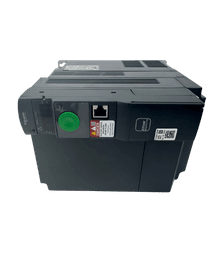
Need a Replacement Altivar Drive?
Browse new original Altivar drives for maintenance, troubleshooting, and replacement projects.
- New original parts
- Fast response
- Global shipping
2. Verify the Supplier’s Identity and Sourcing Status
Begin with the legal business name, operating address, company registration details where available, and established contact channels.
Check that quotations, invoices, and payment instructions identify the expected contracting entity. Resolve unexplained differences before issuing an order. If payment details change, verify them through a previously established contact route.
Then record how the supplier relates to the manufacturer.
| Supplier classification | Evidence to record | What still needs checking |
|---|---|---|
| Manufacturer-direct source | Official sales channel and contracting entity | Product availability, territory and applicable terms |
| Authorized distributor | Current manufacturer confirmation for the relevant business | Brand, product range, geographic scope and support arrangements |
| Independent supplier | Verified business identity and disclosed sourcing information | Product origin evidence, condition, seller warranty and manufacturer support eligibility |
| Unverified candidate | Information received but not yet confirmed | All outstanding qualification requirements |
Schneider Electric provides a locator covering distributors, integrators, and other sales channels. Use the relevant manufacturer’s official resources to establish the supplier’s role; a company appearing in one partner category should not automatically be recorded as an authorized distributor for every product. Schneider Electric: Find a Distributor
Record the verification date and evidence link. A brand logo on a website, an old certificate, or a seller’s statement alone should not close the authorization check.
3. Separate Product Authenticity, Condition and Warranty
These are related questions, but each requires its own answer:
- Is the product authentic?
- Does its actual condition match the quotation?
- Who provides the warranty?
- What manufacturer support or software access applies?
Rockwell Automation explicitly states that products purchased from unauthorized sources are not eligible for its manufacturer warranty. It also advises buyers to verify authorization independently. This is a manufacturer-specific policy; check the applicable policy for each brand and purchasing route. Rockwell Automation: Gray Market and Counterfeit Product
Ask candidates what origin and traceability records they can provide, and whether those records meet your purchasing requirements.
Photographs can help identify the offered model, visible condition, and packaging. They do not conclusively establish authenticity. Rockwell’s guidance describes counterfeit boxes, seals, and labels, which is why appearance should support a broader sourcing review.
For warranty evaluation, obtain written answers covering:
- The party responsible for the warranty.
- Coverage period and its starting point.
- Exclusions and claim documentation.
- Return authorization and assessment process.
- Responsibility for return freight.
- Available remedies and applicable conditions.
A seller-provided warranty should be recorded as such. Do not present it internally as a manufacturer warranty unless that coverage has been verified.
- PLC Solutions
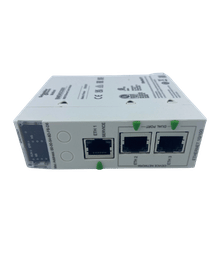
Find the Right PLC for Your System
Explore new original PLC CPUs, I/O modules, power supplies, and communication units for maintenance and automation projects.
- New original parts
- Fast response
- Global shipping
4. Send Every Candidate the Same RFQ
A consistent request for quotation makes supplier comparisons meaningful.
Provide the complete model, quantity, acceptable condition, revision restrictions, delivery destination, and required date. State whether alternatives are prohibited or may be proposed separately for engineering review.
Require candidates to identify the following:
| RFQ response item | What a useful answer establishes |
|---|---|
| Exact offered reference | Whether the quotation matches the requested part, including suffixes |
| Product condition | Whether the item meets the agreed condition definition |
| Availability basis | Whether stock is held, reserved, or dependent on another source |
| Dispatch commitment | What event starts the lead time and what conditions apply |
| Included accessories | Whether connectors, terminal assemblies or other required items are included |
| Warranty provider | Who handles claims and under which written terms |
| Delivery and charges | Shipping arrangements, destination and stated inclusions or exclusions |
| Deviations | Any differences requiring approval before purchase |
Treat “in stock” as a claim to clarify. Ask whether the quantity is available for allocation, where it will ship from, and how long the offer remains valid.
A reliable answer can include a limitation. “Available subject to upstream confirmation” provides more useful information than an unsupported promise of immediate dispatch.
5. Check Whether the Supplier Handles Technical Details Accurately
The supplier should preserve the exact requirement through quotation, order confirmation, and dispatch.
Look for careful handling of model suffixes, voltage classes, communication interfaces, motor options, and revision restrictions. When alternatives are proposed, request the supporting documentation and route the decision to the responsible engineer.
Rockwell Automation’s compatibility resources provide tools for checking product combinations, firmware, software, and lifecycle information. Use applicable manufacturer resources when assessing a proposed replacement rather than relying only on a seller’s assurance. Rockwell Automation: Product Compatibility and Migration
A supplier’s ability to locate a component does not establish that the component will work in your application.
Record the boundary between sourcing support and engineering approval. This is especially useful when purchasing supports several machines with similar-looking but different configurations.
6. Apply Mandatory Checks Before Comparing Scores
A scorecard can help compare qualified candidates. It should not allow a low price or fast response to cancel out a critical unresolved issue.
Set mandatory requirements first. Depending on your application, these may include:
- Verified business identity.
- Acceptable sourcing evidence.
- Accurate model and condition disclosure.
- Required manufacturer authorization or support eligibility.
- Written warranty and return terms.
- Agreement that substitutions require approval.
Keep a candidate pending if a mandatory requirement remains unresolved.
Once those checks pass, compare candidates on quotation accuracy, delivery performance, documentation, issue handling, and total purchasing cost. Define your scoring method internally and apply it consistently.
For safety-related or otherwise restricted purchases, use your organization’s specific qualification requirements. Do not assume that general approval for automation components covers every application.
- HMI Replacement
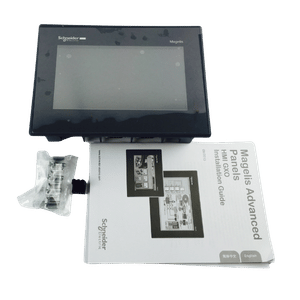
Upgrade or Replace Your HMI
Find compatible HMI panels for discontinued models, machine upgrades, and operator interface replacement.
- New original parts
- Fast response
- Global shipping
7. Evaluate an Initial Order Before Expanding Approval
Where practical, begin with a limited order suited to controlled receiving and technical assessment. Avoid making an unqualified supplier’s first transaction the sole recovery plan for a critical breakdown.
Before placing the order, define acceptance criteria. After receipt, compare:
- The delivered model and quantity against the purchase order.
- Product condition against the agreed description.
- Required accessories and documentation.
- Packaging condition and transit damage.
- Actual dispatch and receipt dates against the agreed milestones.
Where functional evaluation is necessary, have qualified personnel follow the applicable equipment procedures. A successful power-up alone does not establish authenticity, full functionality, or application compatibility.
Document discrepancies and observe how the supplier responds. Clear ownership, accurate information, and a completed corrective action provide better evidence than a quick acknowledgment.
One successful order supports a limited approval decision. It does not prove performance across every brand, product category, or shipment route.
8. Build a Supplier Register That Buyers Can Actually Use
A spreadsheet or procurement system can work, provided approval scope and evidence remain visible.
| Register field | What to record |
|---|---|
| Supplier identity | Legal name, address, website and verified contacts |
| Sourcing classification | Manufacturer-direct, authorized distributor, independent supplier or unverified |
| Approved scope | Brands, categories, product conditions and purchasing restrictions |
| Verification evidence | Documents, official confirmation links and review dates |
| Availability capability | Stock confirmation process and supported shipping locations |
| Commercial terms | Quotation validity, payment terms and delivery conditions |
| Warranty and returns | Responsible party, claim route and agreed terms |
| Order history | Relevant purchases, receipt results and unresolved issues |
| Approval status | Pending, trial, approved, restricted or suspended |
| Ownership | Internal approver, responsible buyer and next review date |
Keep manufacturer authorization and internal approval in separate fields. A company can be internally approved for a limited sourcing role without being authorized by a manufacturer.
Illustrative example: A supplier may be approved for specified new sensors delivered to one plant after satisfactory orders. A proposal to supply a discontinued PLC with different sourcing evidence should receive a separate review.
9. Maintain Coverage and Review Actual Performance
Build coverage around important requirements, rather than targeting an arbitrary number of suppliers.
For critical parts, identify a primary source and a qualified alternative where feasible. Consider whether the alternatives depend on the same upstream stock or shipping route. Two quotations do not necessarily represent two independent sources of supply.
Track performance using consistent definitions:
| Measure | Practical definition |
|---|---|
| Delivery reliability | Order lines received by the agreed required date |
| Order accuracy | Lines received with the correct model, quantity and condition |
| Documentation completeness | Receipts containing all agreed documents |
| Issue resolution | Time and effectiveness of closing documented problems |
| Availability accuracy | Whether confirmed quantities and dispatch commitments were fulfilled |
Keep the original commitment and any later revisions. Otherwise, repeatedly moving the promised date can hide poor delivery performance.
Choose a review interval based on purchasing activity and component criticality. Trigger additional reviews after material changes, such as a new sourcing route, loss of authorization, repeated shortages, unexplained substitutions, or unresolved authenticity concerns.
A supplier list remains useful when buyers can see both the current approval and the evidence behind it.
Frequently Asked Questions
There is no universal number. Prioritize adequate coverage for critical brands, product families, and destinations. A smaller list of verified, actively managed suppliers can be more useful than a large directory of untested contacts.
No. If a certificate is relevant to qualification, verify its validity and scope separately. Manufacturer authorization requires confirmation through the manufacturer’s applicable channel or written verification.
Treat it as a documented exception under your organization’s process. Identify the missing evidence, the specific order, the responsible decision-maker, and required acceptance checks. An emergency purchase should not silently create unrestricted supplier approval.
Consider suspension when a serious issue prevents confident purchasing, such as misrepresented condition, unexplained substitutions, unresolved authenticity concerns, or repeated failure to meet agreed requirements. Record the reason, affected scope, and evidence required before reinstatement.
Power your projects with brand-new, original Omron, Mitsubishi, Schneider PLC – in stock, ready now!
Request a Quote Against Your Qualification Requirements
When evaluating an additional independent source, apply the same qualification process used for other candidates.
You can send Kwoco the exact part numbers, quantities, destination, and required condition, together with any revision or documentation requirements. Request availability, lead time, and applicable warranty terms for the specific offer, then assess that offer against your approved purchasing criteria.
Contact Us
Just fill out your name, email address, and a brief description of your inquiry in this form. We will contact you within 24 hours.
Product Category
Hot Sale Products
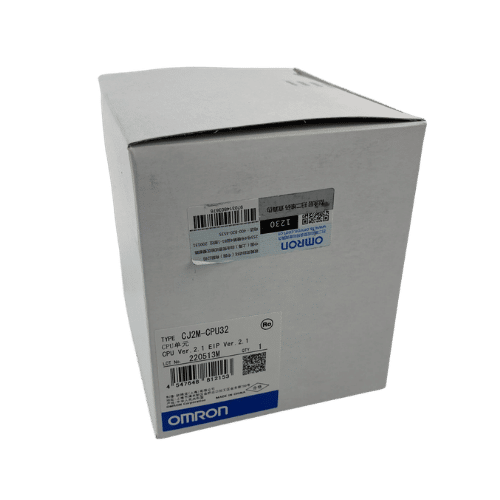
Omron CPU Unit CJ2M-CPU32
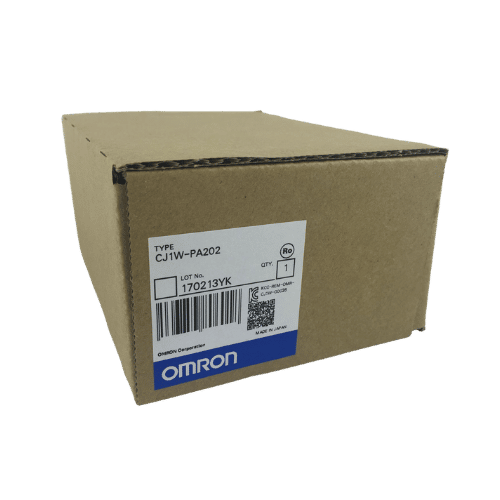
Omron PLC CJ1W-PA202 Supplier in China
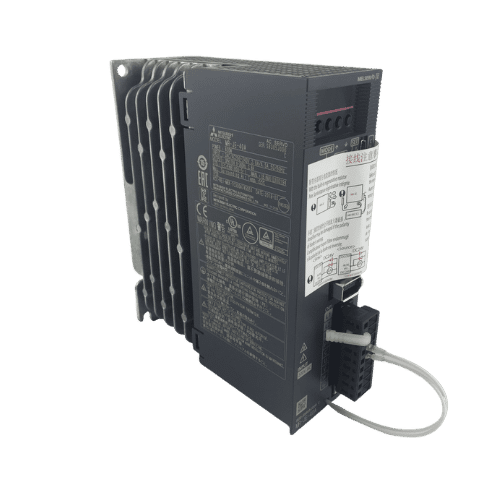
Mitsubishi MR-JE Series 400w Servo Drive MR-JE-40A
Need a Fast Match?
Share your model or spec and our team will help you find the right fit-fast.
- Expert support
- Quick response
- Competitive price
- +86-755-81481609
- [email protected]
You May Also Find These Topics Interesting
How to Choose an Omron Servo Drive
Choosing an Omron servo drive is not only about matching a power rating.
In real projects, the right choice depends on the motor,

Essential Guide to Sensor Calibration for Industrial Accuracy
Sensor calibration is a fundamental part of industrial measurement, essential for ensuring accuracy, reliability, and safe operation in various process plants. Whether

France Omron PLC Supplier Near You
In the field of industrial automation, integrity and effectiveness are the foundations of success. As the core of complex systems, the PLC