
 English
  Italian
  Portuguese
  Spanish
  German
  French
  Hungarian
  Indonesian
  Turkish
  Serbian
  Romanian
  Malay
Malay  Russian
 How to Verify Original Omron, Mitsubishi, Schneider Automation Parts
Table of Contents
Packaging, a serial number or a successful QR scan should support that process—not replace it.
The key is to understand what each piece of evidence actually confirms. A product page can confirm that a model exists. An invoice can document a transaction. Neither, by itself, authenticates the physical PLC, HMI, drive or I/O module in front of you.
This guide explains how to combine those checks before purchasing and during incoming inspection.
What Does “Original” Mean When Buying Automation Parts?
Before comparing quotations, separate four questions:
| Question | What you need to establish |
|---|---|
| Is it genuine? | Whether the unit was manufactured by the stated brand. |
| Is it new? | Whether its condition and history match the seller’s description. |
| Is the supply channel authorized? | Whether the manufacturer recognizes the seller for the relevant products and territory. |
| Is it suitable for your application? | Whether the exact model, revision and specifications meet your requirements. |
These questions are related, but they are not interchangeable. A genuine unit may be used, repaired or supplied through an independent reseller. A genuine replacement can also be unsuitable for the machine.
Schneider Electric specifically warns that refurbished or remanufactured products can retain original labels, creating the impression that they remain unmodified. Its counterfeit guidance also describes products relabeled to appear new. Authenticity and condition therefore need separate attention. Schneider Electric: Awareness and actions against counterfeits
For purchasing purposes, replace vague descriptions such as “original quality” with a written statement of the required condition: new and unused, unused older stock, refurbished or used.
Start by Verifying the Supplier
Ask for the supplier’s full legal name, business address and the entity that will issue the invoice. If the seller claims to be an authorized distributor, verify that claim through a manufacturer-controlled website or regional office.
Check the exact entity rather than relying on a similar company name, a brand logo on a website or a certificate supplied by the seller.
Mitsubishi Electric’s bulletin Precautions against counterfeits reported both counterfeit programmable controllers and secondhand products repackaged as new. It also warned about counterfeit agency certificates. Although the bulletin dates from April 2007, it illustrates why authorization documents should be confirmed independently. Mitsubishi Electric, T99-0076, page 1
For an independent reseller, ask what traceability information is available for the proposed stock. Useful records may include the source of supply, invoice references and photographs linked to the actual lot.
An unavailable upstream invoice does not automatically prove counterfeiting. It does, however, leave an evidence gap that should be considered before payment.
- Related Product
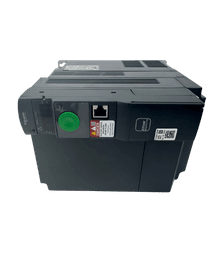
Need a Replacement Altivar Drive?
Browse new original Altivar drives for maintenance, troubleshooting, and replacement projects.
- New original parts
- Fast response
- Global shipping
How to Check Omron Automation Parts
Use the Industrial Automation contact route
Begin with OMRON’s Industrial Automation Global Network to identify the appropriate regional operation.
Provide the exact model and the seller’s legal name. Ask the regional contact to confirm the seller’s authorization status where applicable and explain what verification support is available for that particular product.
For a unit-specific enquiry, prepare:
- Clear photographs of the product and its identification label.
- The complete model reference, including suffixes.
- Serial, lot or production identifiers exactly as printed.
- Packaging photographs and purchase information.
- A precise explanation of the discrepancy.
Avoid reducing the question to “Does this model exist?” Model identification and authentication of a supplied unit are different requests.
Do not confuse certification searches with authentication
OMRON’s official Models with Standards Certification service provides model-level certification and conformity information. It is useful when checking whether a product type has the required approvals. OMRON: Models with Standards Certification
Finding a model in that database does not establish the authenticity of an individual unit carrying the same reference. Use certification information to check the model’s documented status, while investigating the supplied unit through its records and the relevant manufacturer contact.
How to Check Mitsubishi Automation Parts
Confirm the purchasing channel for your region
Mitsubishi Electric Asia’s current advisory recommends authorized purchasing channels and identifies risks associated with unauthorized sources, including counterfeit or altered products and potential restrictions on warranty or service eligibility. These statements apply within that regional advisory; confirm the applicable arrangements for your destination market. Mitsubishi Electric Asia: Disclaimer for Counterfeit Products
When requesting verification, identify the exact product family and reference. “Mitsubishi PLC” is too broad to resolve a label, packaging or product-history question.
Check documented changes before judging a label
A different label is a reason to investigate, but it is not sufficient evidence of a counterfeit.
For example, Mitsubishi Electric bulletin FA-A-0396-A documents the removal of the EAC mark from relevant MELSEC, MELIPC and GOT products and packaging. The change began with products manufactured in December 2022, and the bulletin notes that old and new indications could coexist during the transition. Mitsubishi Electric, FA-A-0396-A, page 1
Compare the unit against information applicable to its model and production period. A photograph of a different generation—or another seller’s listing—is a weak reference for deciding whether a marking is correct.
- PLC Solutions
Find the Right PLC for Your System
Explore new original PLC CPUs, I/O modules, power supplies, and communication units for maintenance and automation projects.
- New original parts
- Fast response
- Global shipping
How to Check Schneider Automation Parts
Verify the channel and the purpose of the scan
Schneider Electric recommends buying through authorized distributors, retailers and partners. Start with its official distributor locator when checking an authorization claim.
Next, determine what any QR code or digital lookup is designed to do.
The mySchneider app provides access to product information through scanning and supports product registration using QR codes or serial numbers. Those functions should not be treated as a universal physical-product authentication service. Opening the correct catalogue page confirms the destination of the code; it does not independently establish the origin of the object carrying it.
Use product-specific anti-counterfeit features where documented
Some Schneider products have more specific functions. Schneider’s official FAQ for TeSys Giga states that scanning its QR code can provide a serial-number anti-fake query, along with manufacturing information and product documentation. Schneider Electric: TeSys Giga QR-code details, FAQ000222783
That is a product-specific example. Do not assume every Modicon PLC, Altivar drive or other Schneider device uses the same process.
Follow the instructions applicable to the exact product. Save the result and refer unexpected responses or conflicting identification information to Schneider’s official support channel.
What Common Checks Can—and Cannot—Tell You
Use the following distinctions when reviewing supplier evidence:
| Check | What it helps establish | What it does not establish alone |
|---|---|---|
| Official model or datasheet lookup | The reference exists and has documented specifications | The delivered unit is genuine |
| Supplier invoice | The documented transaction and seller | The manufacturer origin of the physical unit |
| Authorization confirmation | The named seller’s recognized status within the confirmed scope | The condition of every unit received |
| QR code opening a product page | The code links to relevant product information | Unit-level authenticity |
| Label and packaging inspection | Consistency, damage and discrepancies requiring investigation | A definitive genuine-or-counterfeit verdict |
| Successful functional test | Performance under the conditions actually tested | Authenticity, unused condition or remaining service life |
A polished label, intact carton or plausible serial number should never carry more weight than the evidence supports. Likewise, an unusual appearance should trigger a documented enquiry rather than an unsupported accusation.
- HMI Replacement
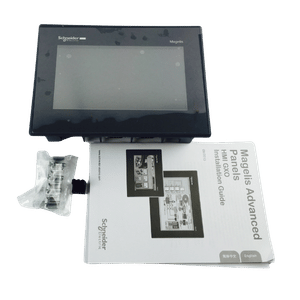
Upgrade or Replace Your HMI
Find compatible HMI panels for discontinued models, machine upgrades, and operator interface replacement.
- New original parts
- Fast response
- Global shipping
A Practical Verification Workflow Before Installation
The following workflow is a purchasing and incoming-inspection framework. It does not replace a manufacturer’s product-specific authentication procedure.
1. Agree on the exact item before payment
Record the complete part reference and required condition in the quotation or purchase order. Include relevant revision requirements where these affect the application.
Request photographs of the proposed stock when provenance or condition needs closer review. Catalogue images cannot show the condition of the unit that will be shipped.
Agree in writing on the process for handling a mismatch or unresolved authenticity concern. Establishing that process before payment makes later discussions more concrete.
2. Inspect and record the delivery
Photograph the shipment, packaging and accessible product identification before discarding materials or mixing units into existing stock.
Check:
- Whether the delivered reference matches the purchase order.
- Whether product and packaging identifiers are consistent where they identify the same item.
- Whether the quantity and declared condition match the order.
- Whether there are signs of damage, altered identification or previous installation.
- Whether any discrepancy needs manufacturer clarification.
Do not assume every printed code is a unique serial number. First establish whether it identifies a unit, batch, model or packaging reference.
3. Investigate discrepancies without dismantling the product
Record what you can observe without opening sealed assemblies or changing the product’s condition.
Describe findings precisely. “The product reference differs from the ordered suffix” is actionable. “The label looks fake” is an interpretation that needs further evidence.
Where markings differ, check for applicable manufacturer notices or request clarification using photographs of the actual unit.
4. Send a focused evidence package
A useful manufacturer enquiry includes the model, all relevant identifiers, photographs, supplier details, purchase date and the specific reason for concern.
Ask what the response confirms:
- The model’s existence?
- The seller’s authorization?
- The interpretation of an identifier?
- The supplied unit’s authenticity?
- Whether further inspection is required?
Keep the response with the purchase record. A reply about specifications should not be filed as proof of authenticity.
5. Make an explicit acceptance decision
Use a clear status rather than leaving the result as “probably original.”
| Status | Recommended purchasing action |
|---|---|
| Evidence meets your acceptance requirements | Record the checks and release through the normal inspection process |
| A discrepancy remains unresolved | Keep the unit on hold and seek clarification |
| A counterfeit or material misrepresentation is confirmed | Segregate the unit and follow the agreed return and manufacturer reporting process |
Do not use installation in a production machine as an authenticity test. Functional commissioning is a separate engineering activity performed after purchasing and inspection concerns have been resolved.
Frequently Asked Questions
Yes. Authenticity concerns origin, while age and storage history concern condition and suitability.
If unused older stock is acceptable, specify that explicitly. Ask for available production and storage information, then check the manufacturer’s requirements for the exact product before commissioning. An old production date alone does not establish that a unit is counterfeit.
No. A search result is not an authentication decision.
Check the complete reference, including suffixes, and ask the relevant manufacturer contact about the product’s identification and documentation. If the identity remains unresolved, retain an “unverified” status rather than treating either the seller’s claim or the missing result as conclusive.
Power your projects with brand-new, original Omron, Mitsubishi, Schneider PLC – in stock, ready now!
Prepare Your Next Sourcing Enquiry
For a sourcing enquiry, contact Kwoco with the complete model number, quantity, destination and required condition. Include any traceability requirements and ask which photographs and supporting records are available for the proposed stock before placing an order.
Contact Us
Just fill out your name, email address, and a brief description of your inquiry in this form. We will contact you within 24 hours.
Product Category
Hot Sale Products
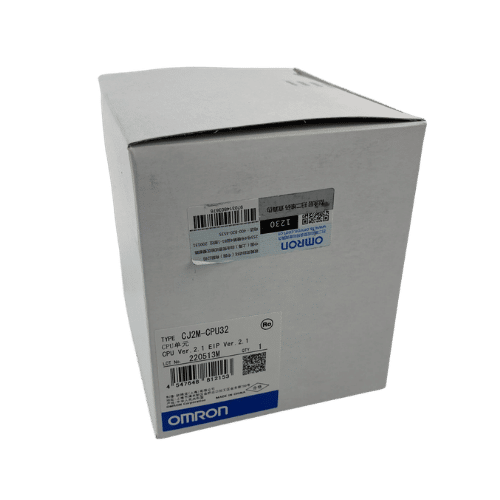
Omron CPU Unit CJ2M-CPU32
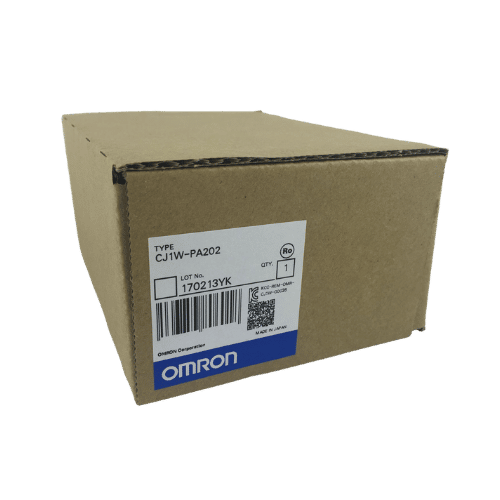
Omron PLC CJ1W-PA202 Supplier in China
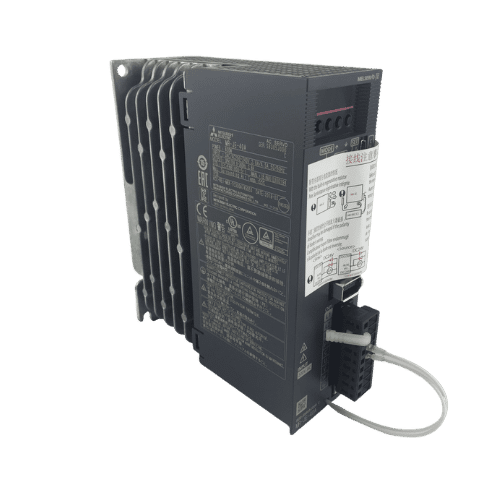
Mitsubishi MR-JE Series 400w Servo Drive MR-JE-40A
Need a Fast Match?
Share your model or spec and our team will help you find the right fit-fast.
- Expert support
- Quick response
- Competitive price
- +86-755-81481609
- [email protected]
You May Also Find These Topics Interesting
What is PLC Ladder Logic and How Does it Work?
Programmable Logic Controllers (PLCs) are the backbone of industrial automation, and ladder logic is the most popular programming language used to instruct
Capacitor Reforming: Bringing Your VFD Back to Life After Storage
This article explores the critical process of capacitor reforming for Variable Frequency Drives (VFDs) that have been in storage. If you’re in
The Basic Distinction Between Large-Scale and Mid-Range PLCs
For a long period of time, the PLC Industry has used I/O point count as the requirement to separate in between mid-range