
Choosing a Photoelectric Sensor for Clear Bottles and Transparent Packaging
Table of Contents
The sensor needs to register the small change as the leading edge arrives, hold its output steady across the bottle, then release it in the gap before the next one. A sample that switches the indicator on a workbench proves only the first part of that job. Omron E3S-DB application guide
Clear film presents a different buying decision. A bottle counter has to distinguish one container from the next. A film-break detector may have to hold the same state for hours while a clear web runs past, then switch when the web tears. Before comparing ranges or prices, write down the event the PLC needs to see. That determines which samples to send and what a successful trial looks like.
Choose the sensing point before the model
| Job on the line | Candidate to evaluate | What the trial must demonstrate |
|---|---|---|
| Count clear PET or glass bottles | Clear-object retroreflective sensor with a beam narrow enough to resolve the closest spacing | One count per bottle, including when two pass at minimum spacing |
| Detect an empty transparent tray | Clear-object sensor aimed through a repeatable part of the sidewall or rim | The shallowest tray is detected across the full range of guide play |
| Detect a break in clear packaging film | Sensor specified for transparent film or web-break detection | A single layer holds the web-present state, and a real break changes it |
| Detect loose shrink wrap | Transparent-film sensor aimed where loose film would enter the beam | Correctly wrapped packs clear the sensing point, while the smallest unacceptable flap registers |
Omron identifies bottles, films and trays as applications for its E3S-DB family. Banner lists bottle counting and clear-film web-break detection for its QS30ELVC. Those application descriptions help build a shortlist. The acceptance tests above are ways to qualify a candidate on your packaging line.
- Related Product
Need a Replacement Altivar Drive?
Browse new original Altivar drives for maintenance, troubleshooting, and replacement projects.
- New original parts
- Fast response
- Global shipping
A bottle can produce more than one switching point
Consider an empty ribbed PET bottle moving past the sensor. Its leading wall bends some light away from the receiver. Farther across the bottle, a curved section may return enough light to cross the switching threshold again. The result can be two counts from one bottle, even though the sensor responds promptly each time. Increasing sensitivity without observing the whole passage can make the extra transition harder to eliminate.
Try more than one beam height. A straight section of the body is worth testing if the shoulder or molded ribs give erratic results. At the new height, run the shortest bottle and let samples travel at both limits of the guide rails. On a line that handles filled and empty containers, test both conditions. Omron publishes separate attenuation data for empty and water-filled PET and glass bottles, as well as for film and trays. Its figures are typical values for stated optical arrangements. Omron E3S-DB datasheet, “Attenuation Level vs. Sensing Object Characteristics,” p. 5
There is a simpler option when every acceptable bottle already carries an opaque feature. A sensor aimed at the cap may be sufficient to count capped bottles. Decide what should happen when an uncapped bottle passes. If that bottle must still count, the cap is the wrong sensing point.
For film, take a single layer to the trial
A folded strip is convenient to carry and easy to hold in front of a sensor. It also puts two layers in the light path. For a web-presence application, bring material from the actual roll, stretch one layer across the proposed beam position and test the amount of flutter the machine allows. Include the clearest unprinted section. A sensor that responds only when the print passes will give a very convincing demonstration on the wrong part of the sample.
Ask which reflector was used for the demonstration. Some transparent-film arrangements use polarization so the material changes the returning light enough for the receiver to distinguish it. The reflector is part of that optical arrangement. Specify its part number and the distance between the sensor and reflector on the quotation. Two tests using the same head and different reflectors can give different results.
A loose-wrap inspection needs its own physical sample. Run a good pack first, then one with the smallest flap the machine must reject. If both packs put clear film in the beam at the same position, the sensor may correctly report film present for both. Move the sensing point to somewhere the flap protrudes beyond the normal pack profile and repeat the trial.
- PLC Solutions
Find the Right PLC for Your System
Explore new original PLC CPUs, I/O modules, power supplies, and communication units for maintenance and automation projects.
- New original parts
- Fast response
- Global shipping
Size the beam and the input timing for the smallest gap
Measure the clear space between adjacent bottles at beam height. Bottles that touch at the body can still have a gap at the neck. Moving the sensor up may recover that gap, provided the shortest bottle still reaches the beam and neck movement does not cause missed counts.
For example, a 5 mm gap at 1 m/s passes a fixed point in 5 ms. That is the geometric time available. A beam wide enough to overlap both bottle edges can shorten the clear signal further. The sensor must release, the PLC input filter must accept the pulse, and the controller must capture it. Check the configured input channel before approving a fast sensor on response time alone.
Omron gives a speed example for a narrow-beam E3S-DB configuration and explicitly ties it to the model variant and a 200 mm sensing distance. When a supplier quotes a maximum line speed, ask for the beam size at your installed distance and the spacing used in the test. Those details make the number usable.
- HMI Replacement
Upgrade or Replace Your HMI
Find compatible HMI panels for discontinued models, machine upgrades, and operator interface replacement.
- New original parts
- Fast response
- Global shipping
Frequently Asked Questions
It can if the bottle consistently reduces the received light enough to switch the output. Test the clear center as well as the leading edge. If the output drops out halfway across one bottle, that arrangement is unsuitable for counting at that position. A dedicated clear-object sensor gives you another optical design to evaluate.
Check whether a small approved reflector fits above or below the guide rail while keeping the beam on every pack size. If the far side is completely inaccessible, ask for a one-sided sensor explicitly rated for the material and have the supplier demonstrate it against your actual background. A successful reflector-based trial qualifies only the mounting arrangement used in that trial.
Only if the chosen sensing point produces a distinct transition between them. Try the neck or shoulder and check the raw PLC input at maximum speed. If two touching bottles keep the input continuously active at every usable height, a counter driven by that input will see one long event. The machine then needs controlled spacing or another way to track individual bottles.
Keep the reflector in the cleaning schedule. Banner’s QS30ELVC compensates for gradual contamination on the sensor or reflector. A shifted bracket, a splash across the optical face or a film scrap over the reflector still calls for inspection. During the trial, establish what the line does when the optical path is obstructed.
A presence sensor qualified on both empty and filled bottles may intentionally give the same output for either one. If the machine must reject an underfill, specify a separate acceptance condition at the minimum permitted liquid level. Test bottles just above and below that level with the production liquid. Published differences in optical attenuation alone do not establish a repeatable fill-level measurement.
Power your projects with brand-new, original Omron, Keyence, Schneider Sensors – in stock, ready now!
What to verify before placing the order
- Measure the mounting span. Record the distance from the proposed sensor face to the reflector, with the guides set for the widest pack. Check that both brackets can stay aligned through a format change and that maintenance can reach both optical faces for cleaning.
- Run the difficult samples at production speed. Include clear unlabelled bottles, the thinnest film, wet product if it occurs on the line, and the smallest normal gap. For bottle counting, compare the PLC count with the number passed. Look for both missed bottles and extra counts.
- Check the installation after cleaning. A washdown rating addresses the hardware’s resistance to specified exposure. A water droplet left on the reflector can still alter the optical signal. Try the first packs after a normal cleaning cycle. Check detergent compatibility for the selected sensor, cable and reflector.
- Put the complete configuration on the quote. Include the sensor and reflector codes, connector or cable, bracket, supply voltage and output type required by the PLC. Record whether the input should turn on with a pack present or with the path clear. If the sensor indicator changes but the input stays off during the trial, verify the input common and output wiring. Kwoco photoelectric sensor wiring guide
For a sourcing enquiry, a side-view photo showing both guide rails, the minimum product gap and a description of the hardest sample are more informative than “sensor for clear plastic.” Include the reflector from the successful trial when requesting the matching parts. Contact Kwoco
Contact Us
Just fill out your name, email address, and a brief description of your inquiry in this form. We will contact you within 24 hours.
Product Category
Hot Sale Products
Omron CPU Unit CJ2M-CPU32
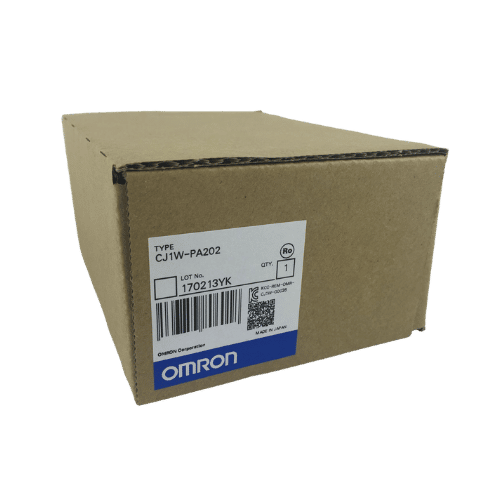
Omron PLC CJ1W-PA202 Supplier in China
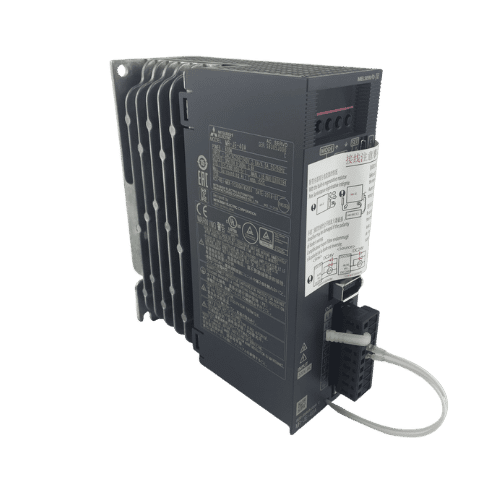
Mitsubishi MR-JE Series 400w Servo Drive MR-JE-40A
Need a Fast Match?
Share your model or spec and our team will help you find the right fit-fast.
- Expert support
- Quick response
- Competitive price
- +86-755-81481609
- [email protected]
You May Also Find These Topics Interesting

What is a Servo and How Does It Work?
One question I often get from clients is: “What exactly is a servo, and how does it work?” Let me break it

Why Choose Allen-Bradley PLCs for Your Project?
Why Choose Allen-Bradley PLCs for Your Project? Struggling with selecting the right PLC for your engineering projects? You’re not alone. Many purchasing
Comprehensive Guide to Photoelectric Sensor Types in Industrial Automation
This article delves into the fascinating world of photoelectric sensors, exploring their various types, functionalities, and applications in industrial automation. We aim