HMI vs. SCADA: Essential Guide to Industrial Automation
This blog dives into the core aspects of HMI and SCADA systems, their components, applications, and the benefits they bring to modern industries.
Table of Contents
What is SCADA and How Does It Work?
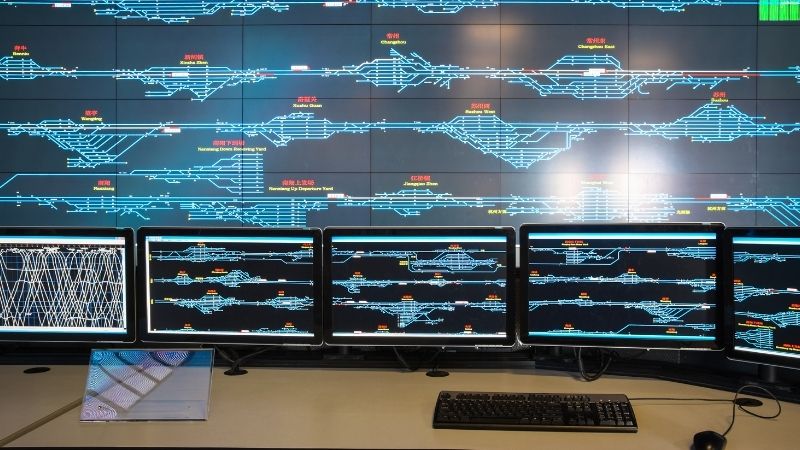
SCADA, short for Supervisory Control and Data Acquisition, is a centralized system designed to monitor and control industrial processes. Combining hardware and software, SCADA enables industries to collect real-time data from sensors, transmit it to control systems, and provide actionable insights.
Key Features of SCADA Systems:
- Data Collection: SCADA gathers information from sensors and transmits it to a central control hub.
- Monitoring and Alerts: It detects deviations or failures and sends real-time alerts.
- Automation: The system automates routine tasks, reducing the need for manual intervention.
- Remote Control: Operators can control equipment and processes from a centralized or remote location.
Industries Leveraging SCADA:
SCADA systems find applications across various sectors, including:
- Oil and Gas
- Water Treatment
- Manufacturing
- Energy Distribution
- Transportation
Understanding HMI: The Operator’s Gateway
Human-Machine Interface (HMI) serves as the visual and interactive medium between operators and industrial control systems. From touchscreens to mobile devices, HMI systems allow operators to monitor and control processes seamlessly.
Components of HMI Systems:
- Hardware: Includes input devices (touchscreens, buttons) and output devices (monitors, indicators).
- Software: Provides a user interface for controlling processes and analyzing data.
- Communication Protocols: Facilitates data exchange between machines and operators via Modbus, Ethernet/IP, or wireless networks.
Applications of HMI Systems:
- Monitoring production lines in manufacturing
- Controlling energy flow in smart grids
- Managing HVAC systems in smart buildings
- Supervising wastewater treatment processes
The Relationship Between HMI and SCADA
While HMI and SCADA are closely connected, they serve distinct purposes in industrial automation:
- HMI as a Component of SCADA: HMI provides a user-friendly interface to interact with the SCADA system.
- SCADA as a Central System: SCADA manages and controls complex operations, while HMI acts as the operator’s visualization tool.
- Together, they ensure seamless data flow, actionable insights, and efficient process control.
Benefits of Integrating HMI and SCADA
The integration of HMI and SCADA offers unparalleled advantages to industrial automation:
- Improved Efficiency: Streamlines operations with real-time monitoring and data analysis.
- Enhanced Safety: Alerts operators to potential hazards, reducing risks.
- Cost Optimization: Automation minimizes operational costs and downtime.
- Scalability: Easily adaptable to expanding industrial needs.
- Remote Accessibility: Enables operators to monitor systems from virtually anywhere.
Core Components of SCADA Systems
To function effectively, SCADA systems rely on four key components:
- Sensors: Measure parameters like temperature, pressure, and flow rate.
- Data Conversion Units: Use PLCs and RTUs to process raw sensor data.
- HMI Dashboards: Present data in an understandable format for operators.
- Communication Networks: Connect components across the facility using wired or wireless methods.
Future Trends in HMI and SCADA
As industries evolve, HMI and SCADA systems are adopting advanced technologies to enhance functionality:
- IoT Integration: Connecting devices for smarter data collection and analysis.
- AI and Machine Learning: Predictive analytics for maintenance and process optimization.
- Cloud Computing: Centralized data storage and remote accessibility.
- Enhanced User Interfaces: More intuitive and customizable HMI designs for better user experience.
Power your projects with brand-new, original Omron, Mitsubishi, Schneider HMI – in stock, ready now!
Conclusion
HMI and SCADA systems are indispensable tools in industrial automation, working in harmony to monitor, control, and optimize complex processes. While SCADA provides a centralized platform for managing operations, HMI bridges the gap between machines and human operators. Together, these technologies enable industries to achieve greater efficiency, safety, and productivity.
If you need an HMI supplier, contact Kwoco. We offer brand-new, original HMIs from Proface, Omron, and Mitsubishi, ready for worldwide shipping. Reliable quality, trusted brands, and global service await you!
Contact Us
Just fill out your name, email address, and a brief description of your inquiry in this form. We will contact you within 24 hours.
You May Also Find These Topics Interesting

Omron NB HMI Communication Error: PLC Cable, Port, and Settings
An Omron NB HMI communication error usually comes down to one of four things: the wrong PLC driver, the wrong COM port, a cable that does not match the selected electrical interface, or communication parameters that differ between the HMI and PLC.

Omron CP1E vs CP2E: What to Know Before Upgrading or Sourcing
If you are choosing between CP1E and CP2E, the short answer is this: CP2E usually makes more sense for new small-machine projects, while CP1E still matters when you are replacing an installed unit and need to avoid surprises in wiring, settings, or communication ports.

What Is an Encoder? Basics of How It Works
Encoders are essential components in today’s automation and motion control systems. They convert motion to an electrical signal that can be read by some type of control device, such as a PLC or a microcontroller. If you’ve ever wondered how machinery precisely detects position and speed, or how robotic arms know where to move, this article is for you. We’ll explore the fundamentals of encoders, their types, and their crucial role in various applications.