Omron also positions its packaging automation approach around machines that are flexible, scalable, connected, safe, and reliable, which is exactly the direction many OEMs and integrators are trying to move.
The hard part is not deciding whether EtherCAT is powerful. The hard part is choosing the right mix of HMI, servo, inverter, remote I/O, and network design without building a system that is more expensive, harder to support, or slower to source than the machine actually needs.
That is the real buyer problem. A packaging OEM may want one platform for wrappers, cartoners, and conveyor modules. A system integrator may need to modernize a machine while keeping some field devices alive.
A distributor may be asked for a stack that is available now, but still makes sense for repeat orders six months from now. In all three cases, “best” does not mean “most advanced.” It means technically right, commercially realistic, and supportable over time.
This article is written for people who buy and specify industrial automation for a living: automation parts distributors, machine builders, project engineering companies, system integrators, and specialized contractors.
The goal is simple: help you compare architecture options, reduce lifecycle risk, control cost, and choose suppliers with more confidence.
Why this choice matters
Architecture affects more than performance
When buyers hear “EtherCAT motion stack,” they usually focus on speed, synchronization, and axis control. Those are important, but they are only part of the decision.
The stack also affects panel layout, wiring hours, startup effort, alarm visibility, spare-parts policy, technician training, and how painful the next retrofit will be.
A good architecture makes the machine easier to commission and easier to own. A poor architecture does the opposite.
It creates small problems that compound: too many device types, inconsistent alarm handling, extra interface modules, undocumented workarounds, and more dependency on one programmer who “just knows how it works.”
That matters in the factory more than many buyers expect. If a machine stops on a Tuesday night shift, nobody cares that the original design looked elegant in a proposal.
What matters is whether maintenance can isolate the fault quickly, whether the operator screen shows something useful, and whether the failed component is standard enough to replace without starting a sourcing emergency.
What B2B buyers are really evaluating
Most professional buyers are balancing six things at once:
- Quality and reliability in the real environment, not just in a datasheet.
- Compliance and documentation readiness for the market they serve.
- MOQ flexibility for prototypes, pilot builds, and production orders.
- Lead time and stock consistency.
- Total cost over the life of the machine.
- Long-term cooperation with a supplier who will still answer the phone after the PO is closed.
That is why technical selection and supplier selection should happen together. If engineering chooses a beautiful architecture that purchasing cannot source predictably, the business still loses.
If purchasing forces a cheaper option that makes commissioning messy and support expensive, the business also loses. The right answer lives in the overlap.
What an Omron EtherCAT HMI and motion stack includes
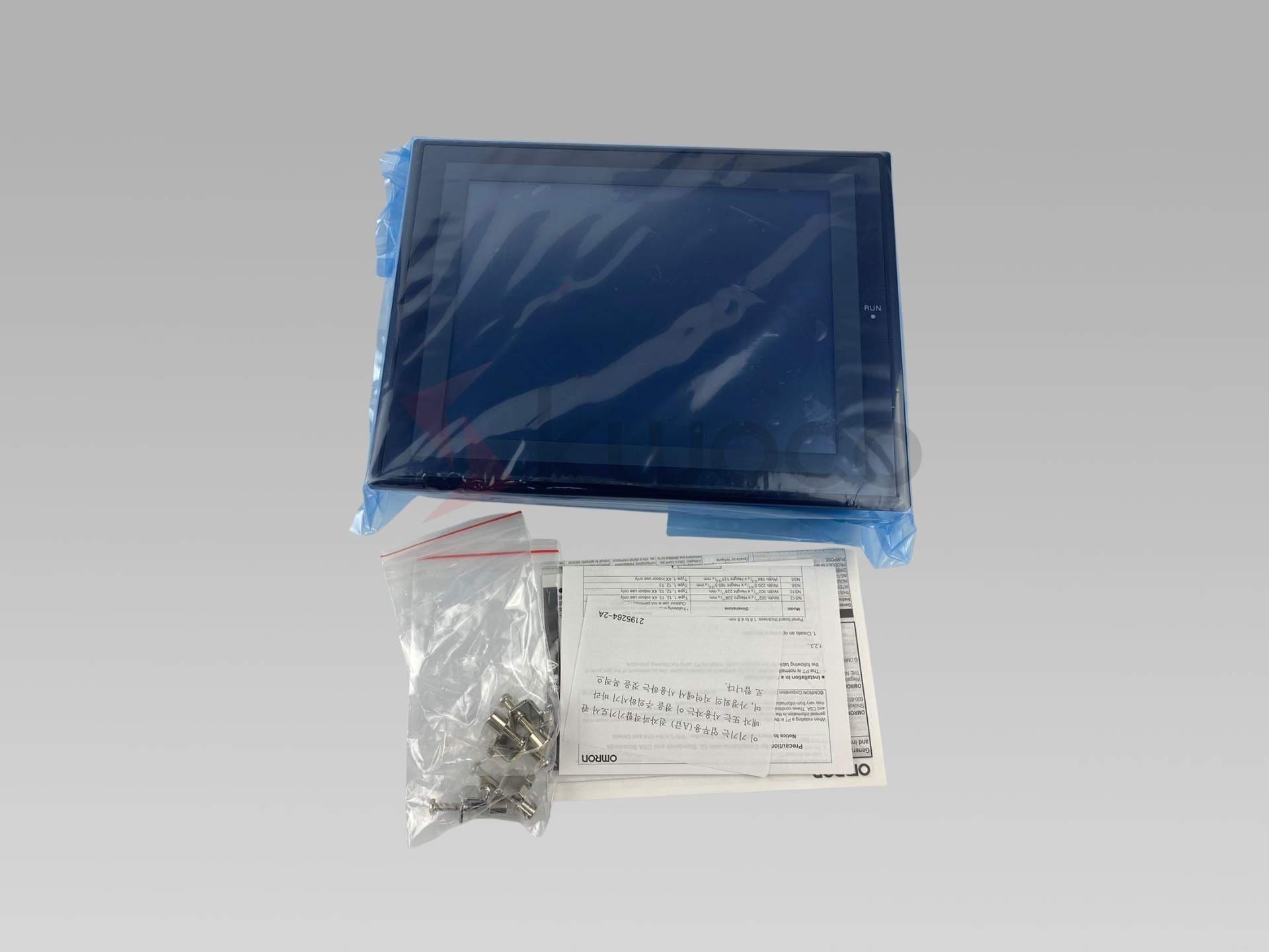
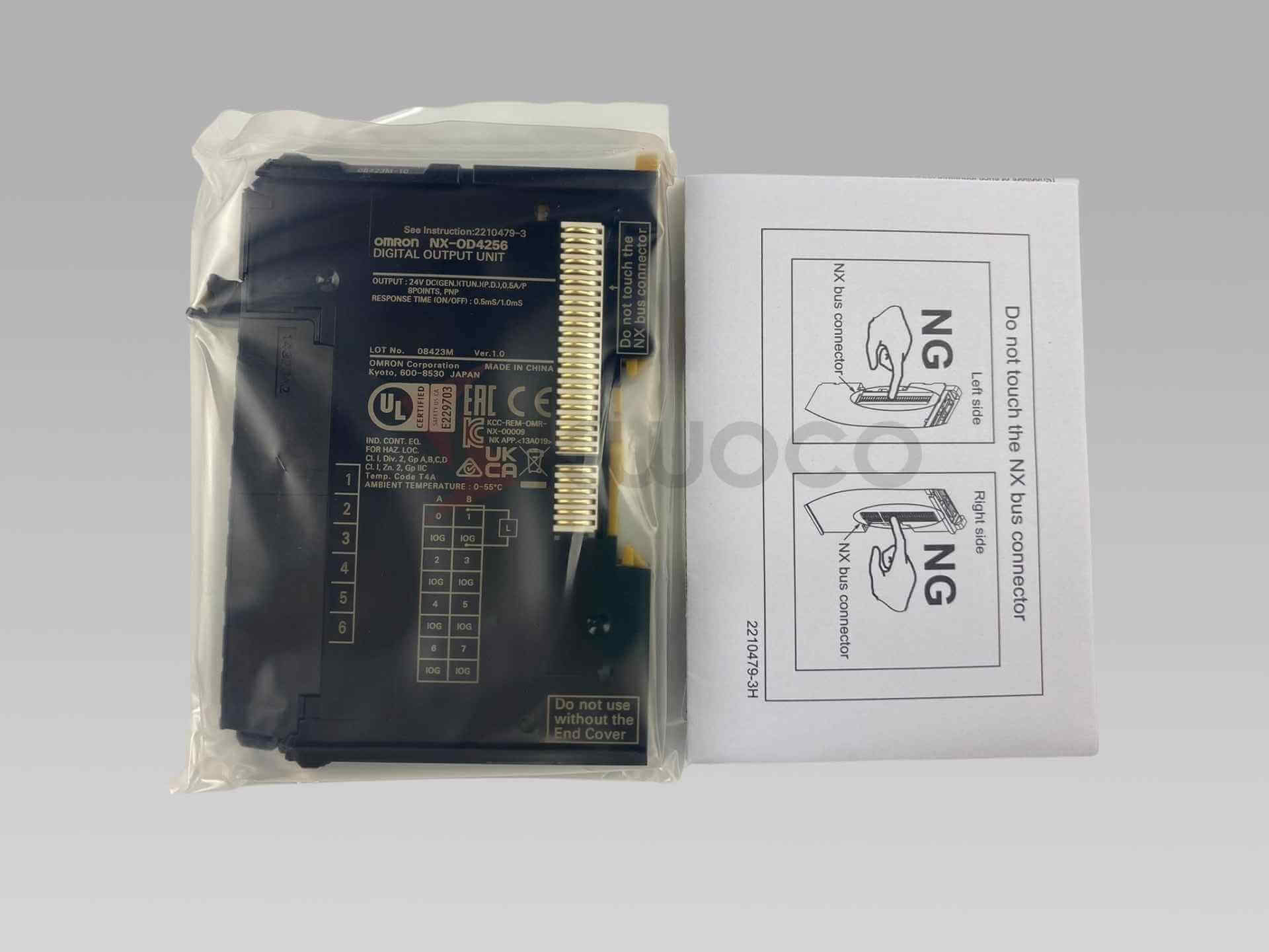
At a practical level, the stack usually includes an Omron HMI, a machine controller, servo drives and motors for precise motion, inverters for variable-speed functions that do not need full servo behavior, remote I/O, and the network pieces that tie everything together.
Omron describes EtherCAT in this context as a field network for connecting drives, intelligent sensors, and I/O, and its broader EtherCAT offering spans controllers, servo drives, inverters, I/O, safety, vision, and sensing.
That sounds broad, but the buying decision becomes easier when you think in terms of machine classes rather than product families.
A compact single machine might need one controller, a modest HMI, two to four servo axes, a few inverters, and a small remote I/O footprint. A modular OEM platform may need a reusable control template that can scale up or down by machine size.
A high-axis packaging line may need tighter coordination, more diagnostics, and room for inspection stations or additional handling modules later.
A retrofit may need to keep some existing field wiring, motor arrangements, or peripheral devices because the downtime window is too tight for a full redesign.
This is where EtherCAT starts to make sense. Omron’s EtherCAT materials emphasize fast communication, tight synchronization, standard RJ45 cabling, and broad device support on the same network.
In plain terms, that means one architecture can often cover a lot of machine functions without the spaghetti that comes from bolting together separate motion, I/O, and device islands.
Still, not every machine needs the same depth. A common mistake is assuming that if EtherCAT can do more, the project should use more. That is how buyers end up paying for controller capacity, motion features, or HMI complexity that operators never use.
How to evaluate the stack
Start with the machine, not the catalog
Before comparing part numbers, define the actual machine behavior.
How many axes are truly coordinated? Which motions are just speed-controlled, and which require precise positioning or synchronization? Does the operator need recipe management?
Is this a machine with one screen and basic alarms, or does maintenance need richer diagnostics and service views? Will the same platform be reused across several models?
A good rule is to write the selection brief in operational language before translating it into hardware language. For example:
- Two axes must stay synchronized during product transfer.
- Conveyor speeds can vary, but they do not need servo precision.
- Operators need recipe-driven changeovers in under three minutes.
- Maintenance must see alarm history and device status without opening the panel.
- The same core architecture should work across three machine sizes.
That kind of brief forces the team to separate true technical requirements from habits and assumptions.
Match the HMI to the operator workflow
Under-specifying the HMI is one of the most expensive ways to “save money.” Not because the screen itself is so costly, but because a weak HMI pushes cost into service calls, operator mistakes, and longer recovery time.
If the machine runs multiple SKUs, the HMI should handle recipe selection cleanly and prevent accidental changes. If the customer exports equipment, screen language and user-level permissions matter. If the machine is maintained by local technicians, alarm messages should point toward action, not just fault codes.
From a factory perspective, a good HMI does three jobs at once:
- It helps operators run the machine correctly.
- It helps maintenance recover the machine quickly.
- It helps engineering standardize the user experience across models.
That last point is more important than it looks. If one OEM platform uses common screen structures, alarm naming, and maintenance pages across all models, training gets easier, commissioning gets faster, and distributors have an easier time supporting repeat buyers.
Use servo where it matters, inverters where they win on cost
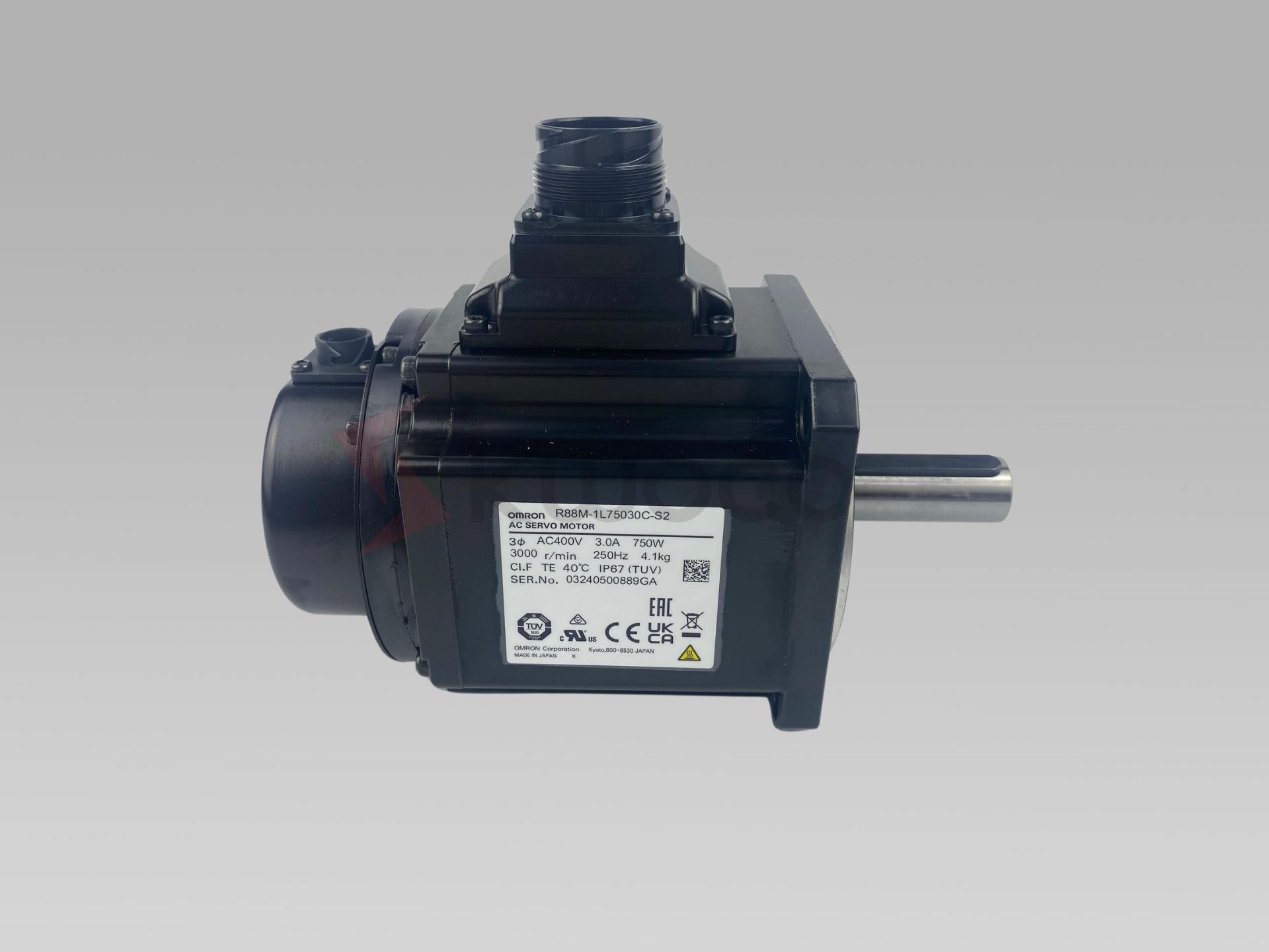
Not every rotating device deserves servo control. Servo is the right choice when the application needs positioning, tight synchronization, registration, or repeatable motion profiles.
Inverters are usually the more economical choice for fans, pumps, simple conveyors, and other variable-speed duties where precision motion is not the value driver.
This is one of the simplest ways to control BOM cost without lowering machine quality. A mixed architecture often beats an all-servo architecture because it puts precision only where precision pays back.
For example, on a packaging machine, the seal jaw timing, film feed registration, or index motion may justify servo. Infeed conveyors, discharge conveyors, or auxiliary drives may only need stable speed control.
If you use servo everywhere, you increase hardware cost, setup effort, spare-parts burden, and technician training requirements. If you use inverters everywhere, you may lose control quality where it matters most. Good buyers do not pick one technology. They assign each one to the right job.
Check scalability before you need it
Omron’s EtherCAT overview highlights support for large device counts, standard cabling, and one network that can include safety-capable communication in the right architecture.
Even if your first machine does not need much expansion, that matters because successful platforms rarely stay small.
Maybe today’s machine has three axes and one HMI. Next year the customer wants vision inspection, more remote I/O, or a second module added to the line. If the original network plan leaves no room for growth, the next revision becomes awkward fast.
Scalability does not mean buying the biggest controller on day one. It means selecting a core architecture that can grow without forcing a full rewrite. Buyers should ask:
- Can we add axes later without redesigning everything?
- Can we reuse the same HMI concept across larger machines?
- Can the network expand to more I/O islands or stations?
- Can this platform become our standard across multiple machine families?
Compare total cost, not hardware price
This is where many projects go wrong. The cheapest stack on paper can be the most expensive stack over two years.
Total cost includes:
- Engineering hours to configure and debug.
- Panel space and heat management.
- Wiring labor.
- Commissioning time.
- Training effort for service teams.
- Spare-parts complexity.
- Downtime exposure when parts are hard to source.
Imagine two options. Option A is 8 percent cheaper on hardware. Option B uses a cleaner network layout, standardizes the HMI template, and reduces commissioning by two days per machine. If the builder ships ten machines a year, Option B may create more margin even before after-sales support is considered.
That is why experienced buyers talk about “supportable cost,” not just purchase price. A machine that is easier to build and easier to service protects margin better than one that is only cheaper on the first quote.
Real-world buying scenarios and common mistakes
A packaging OEM building wrappers, cartoners, and conveyor variants usually benefits from one common motion platform, one HMI design philosophy, and one repeatable network topology.
Omron’s packaging positioning explicitly leans into flexible and scalable machine design, which aligns with that kind of standardization strategy. The win is not just technical consistency.
The win is lower engineering reuse cost, better technician familiarity, and simpler stocking of common parts.
A system integrator doing a retrofit faces a different reality. The technically ideal design may not fit the shutdown window.
In that case, the better decision may be a staged migration: replace controller and HMI first, keep some field devices temporarily, then standardize the rest in a second phase.
That is not “compromise” in a negative sense. It is matching architecture ambition to project constraints.
A distributor supporting an urgent machine build has yet another priority set. The customer may ask for an Omron-centric stack, but what they really mean is: “Give me a reliable architecture I can source now and support later.”
That changes the conversation. Availability, alternates, documentation, and lead-time stability matter as much as performance.
Specialized builders in security or controlled-access environments often care deeply about maintainability and documentation.
They may not have the highest axis count, but they do have strict uptime expectations and review pressure from end users. In that case, a supportable architecture with strong manuals, clear drawings, and repeatable replacement logic may be more valuable than squeezing out the last bit of motion performance.
The most common buyer mistakes are predictable:
- Choosing by unit price alone.
- Over-specifying the motion system.
- Under-specifying the HMI.
- Ignoring lead time until design freeze.
- Mixing components without a standard.
- Failing to plan for lifecycle and obsolescence.
The fix is also predictable: define the machine class, map the real motion functions, document operator needs, validate supply risk early, standardize the core, and pilot the architecture before rolling it out everywhere.

How to choose a supplier, plus buyer FAQs
A strong Omron supplier should understand more than part numbers. They should be able to discuss motion architecture, HMI sizing, likely sourcing risks, and substitution boundaries.
They should be clear about stock, realistic about factory lead times, and comfortable supporting both prototype quantities and repeat OEM demand.
Ask direct questions before ordering:
- What is in stock now?
- What is the factory lead time for the rest?
- Are there MOQ requirements for prototype or pilot builds?
- Can you support blanket orders or scheduled releases?
- What documentation comes with the order?
- What happens if a selected part becomes constrained?
- Can you support repeat builds over the next 12 to 24 months?
Red flags are just as important. Be careful with suppliers who are vague about traceability, promise lead times they cannot document, push oversized hardware without explaining why, or disappear after the quotation stage.
For buyers, a simple evaluation checklist works well:
- Technical support capability.
- Commercial flexibility.
- Inventory depth.
- Export support where relevant.
- Response time.
- Repeat-order consistency.
The Basic Distinction Between Large-Scale and Mid-Range PLCs
For a long period of time, the PLC Industry has used I/O point count as the requirement to separate in between mid-range and large-scale PLCs. Nonetheless, in today’s facility automation atmosphere, I/O capacity is no longer the definitive aspect. Truth difference hinges on redundancy technology and reliability design.
PLC vs VFD: Understanding Programmable Logic Controllers and Variable Frequency Drives
This article delves into the world of industrial automation, exploring the crucial roles of Programmable Logic Controllers (PLCs) and Variable Frequency Drives (VFDs). We’ll break down their functions, compare their strengths and weaknesses, and explain how they work together to optimize industrial processes. Whether you’re in machinery manufacturing, factory solutions, or simply curious about modern automation, this guide will provide a clear understanding of these essential components.
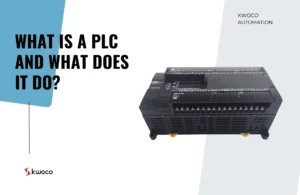
What is a PLC and What Does It Do?
What is a PLC and What Does It Do? In today’s fast-paced industrial world, companies need smart, reliable, and efficient