
This write-up supplies an engineering-level deep study the core design of PLCs, their 3 main categories (Integrated, Modular, and Stackable), and their extensive applications in discrete logic and motion control. By evaluating technological specifications and market fads, this overview works as a reliable referral for PLC equipment option and system assimilation.
I. Defining the PLC
A PLC (Programmable Logic Controller) is a digital computing electronic system specifically engineered for operation within industrial environments. If commercial robotics stand for the ” arm or legs ” of a system, the PLC works as the ” central nervous system ” that manages the whole procedure.
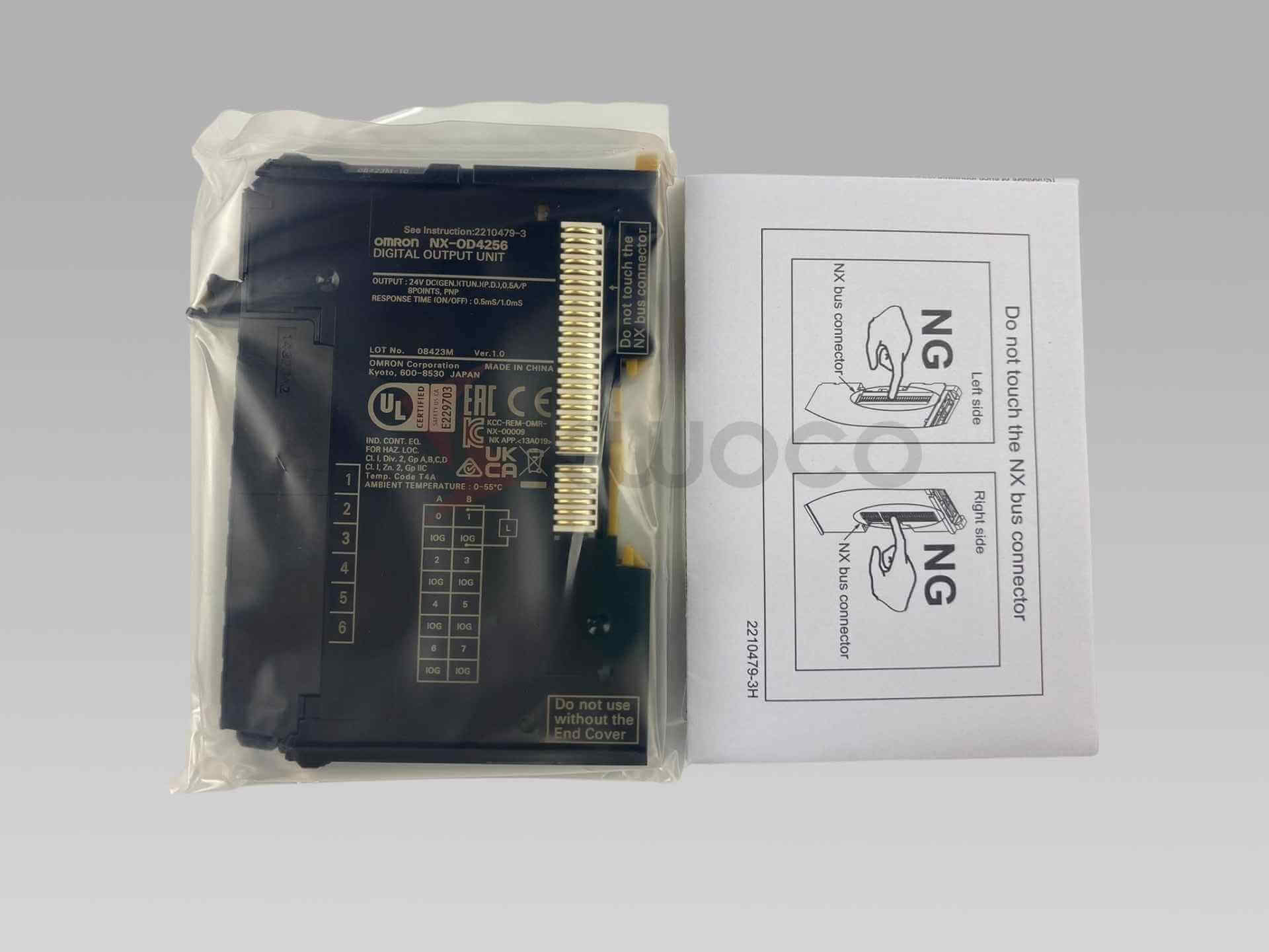
1.1 Core Architecture
The design logic of a PLC mirrors human physiological functions, ensuring high-performance execution in demanding environments:
Microprocessor (CPU): The “brain” in charge of reasoning procedures, instruction decoding, and job organizing.
Memory (ROM/RAM): The “memory system” that stores system firmware, user-defined logic (application programs), and runtime data.
Input/Output Systems (I/O): The ” sensory and electric motor ” interface. Input units interface with field sensors (e.g., photoelectric sensing units, pressure transmitters), while Output units drive actuators (e.g., solenoid shutoffs, contactors).
Power Supply & Programs Terminal: Offers supported power to the backplane and assists in Human-Machine Communication (HMI) for arrangement and troubleshooting.
1.2 Why PLCs Dominate Industrial Control
Contrasted to legacy hard-wired relay control systems, PLCs provide a number of important benefits:
High Dependability: Developed with Large Scale Integration (LSI) circuits, including durable electromagnetic compatibility (EMC) and anti-interference abilities.
Flexibility: Reasoning reconfiguration is attained using software application alteration as opposed to equipment rewiring.
Simplicity of Usage: Makes use of standard shows languages, such as Ladder Diagram (LD) , which lines up with design reasoning.
Environmental Toughness: Engineered to run dependably under severe temperature level, resonance, and electro-magnetic sound licensed under IEC 61131 criteria.
II. PLC Classifications: Scaling for System Requirements
PLC hardware is categorized into three main types based upon structural design. Comprehending these distinctions is crucial for enhanced system architecture.
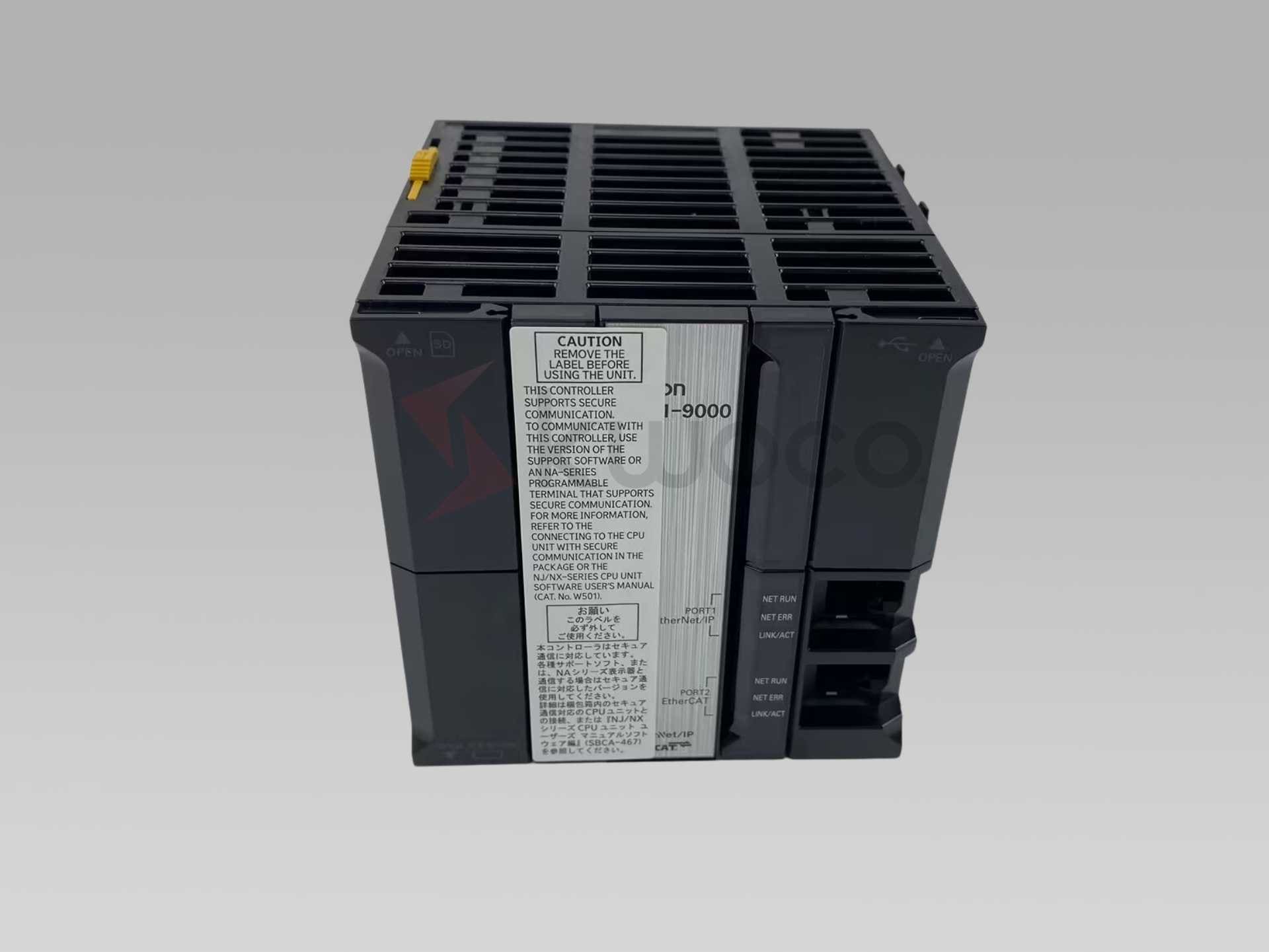
1. Integrated PLC (Compact PLC)
An Integrated PLC houses the CPU, I/O interfaces, memory, and power supply within a single chassis.
Qualities: Compact impact, cost-effective, but with a fixed I/O count.
Applications: Small-scale, standalone OEM machinery such as packaging machines and injection molding machines.
2. Modular PLC
Additionally called Rack-mounted PLC, this kind enables the setting up of CPU components, I/O components, and interaction components onto a typical backplane or bus.
Qualities: Extremely scalable, very easy to preserve, and designed for complex systems.
Applications: Large manufacturing facility automation lines, such as automobile setting up and chemical procedure control. The Siemens SIMATIC S7-1500 series is a prime example.
3. Stackable PLC
A hybrid design where the CPU unit is independent, and expansion units are added via ribbon cables or direct-plug interfaces.
Qualities: Combines a compact form factor with a degree of configuration flexibility.
Table 1: Technical Contrast of PLC Frameworks .
| Parameter | Integrated PLC | Modular PLC | Stackable PLC |
|---|---|---|---|
| Footprint Compactness | Extremely High | Lower (Requires rack space) | High |
| I/O Scalability | Limited (Fixed points) | Extensive (Backplane expansion) | Moderate |
| Maintenance Efficiency | Total unit replacement | Module-level replacement | Unit-level replacement |
| Capital Expenditure | Low | High (Initial investment) | Medium |
| Typical I/O Range | 10 – 64 points | 256+ points | 64 – 256 points |
III. 5 Significant Application Domains
Modern PLCs have actually progressed past straightforward “on/off ” controllers right into multi-functional systems incorporating calculation, interaction, and high-speed movement control.
Discrete Reasoning Control: This is the most basic application of a PLC. It replaces traditional relay logic and is widely used in printing presses, packaging lines, electroplating lines, etc.
Motion Control: Utilizing high-speed pulse outputs or industrial fieldbuses (e.g., EtherCAT) for precision positioning of servo and stepper motors. Essential for CNC machinery and industrial robotics.
Process Control: Leveraging PID formulas to deal with analog signals (temperature level, stress, circulation). Essential in metallurgy, central heating boiler control, and petrochemical markets .
Data Processing & Analytics: Modern PLCs have effective mathematical capacities, interfacing with ERP/MES systems for information procurement, arranging, and coverage.
Industrial Communication/Networking: Supporting protocols such as PROFINET, Modbus TCP, and EtherNet/IP to assist in connection in between PLCs, HMIs, and the Cloud.
IV. Market Fads: The Digital Change of PLCs
Market information suggests that the worldwide need for PLCs is growing at a CAGR of approximately 5% -7%.
Table 2: 2023-2025 PLC Market Technology Trend Forecast
| Trend Direction | Market Share Preference (Forecast) | Key Drivers |
|---|---|---|
| All-in-One Integration | 40% | Demand for space/cost optimization in compact machinery. |
| Edge Computing/Cloud Connectivity | 25% | Data acquisition requirements for IIoT (Industrial IoT). |
| High-Performance Motion Control | 20% | Precision requirements in EV battery and semiconductor industries. |
| Open Platforms/Ease of Programming | 15% | Reduction of engineering hours; alignment with open standards championed by Rockwell Automation. |


What do Photoelectric Sensors Detect?
You might wonder, what exactly do photoelectric sensors detect?
Simply put, photoelectric sensors detect the presence or absence of an object using light. They are essential components in automation, used across industries to ensure processes run smoothly and efficiently.

Mastering Studio 5000 and RSLogix 5000 for Automation
Discover how Studio 5000 Logix Designer and RSLogix 5000 are revolutionizing industrial automation. This insightful guide demystifies these powerful tools, making them accessible for everyone, especially those new to PLC programming or looking to upgrade their skills.

How to Download and Upload Programs for Hitech (Beijer) HMI PWS6000 Series: A Comprehensive Guide
How to Download and Upload Programs for Hitech (Beijer) HMI PWS6000 Series: A Comprehensive Guide The Hitech (Beijer) PWS6000 Series